
How to Control Erosion on a Sloped Utah Yard

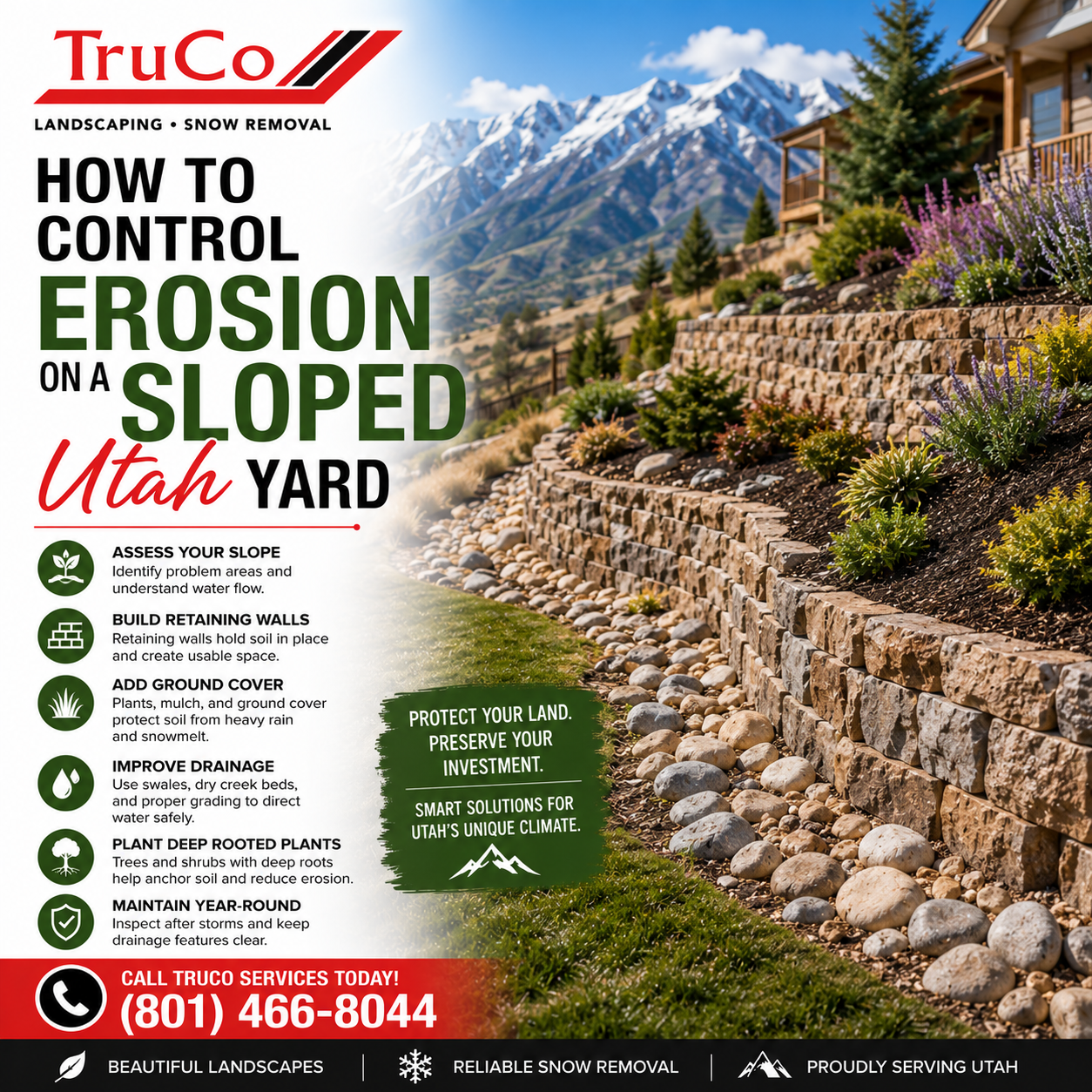
Understanding Erosion on Slopes
Water flowing downhill gains speed and erosive force. Utah's clay soil is especially vulnerable. Spring snowmelt and summer thunderstorms produce the most erosion. Slopes over 10% need active control. Slopes over 25% need professional engineering.
Planting Deep-Rooted Ground Covers
Deep-rooted plants are the most effective long-term erosion control. Roots bind soil and create channels for water infiltration. Good options include creeping Oregon grape, kinnikinnick, creeping thyme, blue fescue, and little bluestem. Plant in staggered rows close enough to cover 80% of soil within two years.
Building Terraces and Retaining Walls
Terracing converts slopes into level steps. Each terrace catches water and allows it to soak in. Vertical spacing depends on slope steepness. Cost: $2,000-10,000 depending on materials.
Using Erosion Control Blankets
Biodegradable mats of straw or coconut fiber protect exposed soil until vegetation establishes. Roll downhill, overlap edges 4-6 inches, secure with staples. Cost: $0.50-2.00 per square foot. Essential for slopes steeper than 3:1.
Improving Irrigation on Slopes
Drip irrigation eliminates runoff by delivering water slowly at the root zone. If using sprinklers, water in short cycles with pauses to allow absorption.
Frequently Asked Questions
Best ground cover for erosion control? Creeping Oregon grape, kinnikinnick, and creeping thyme root deeply and spread quickly.
How steep of a slope can I plant without a wall? Slopes up to 25% can be stabilized with plants and blankets. Steeper slopes need walls.
Will mulch help control erosion? Yes, 2-3 inches of wood chips reduce erosion by 70-80%.
How much does erosion control cost? $500-2,000 for planting. $0.50-2.00 per square foot for blankets. $2,000-10,000+ for terracing.