
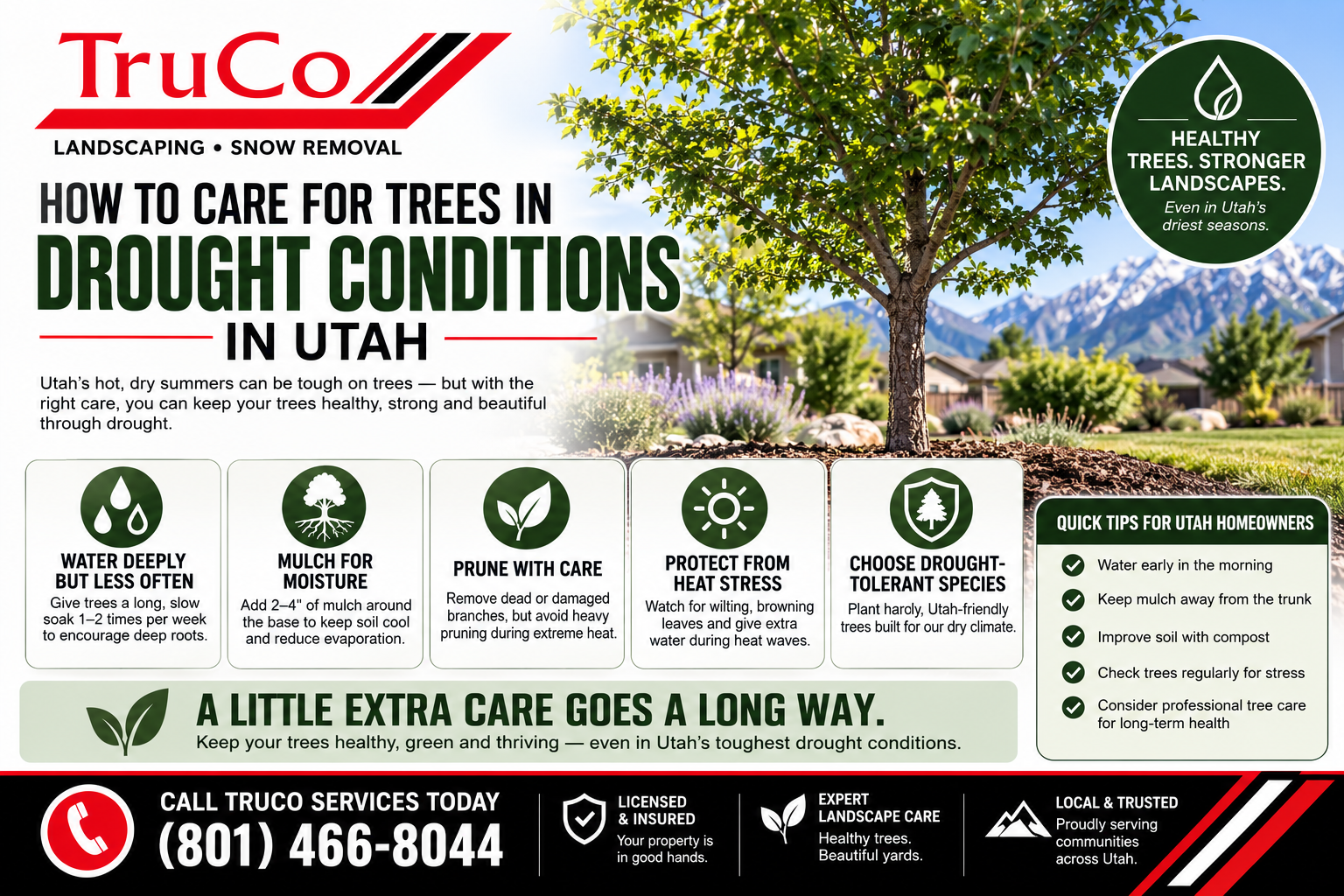
How to Care for Trees in Drought Conditions in Utah

Deep Watering Techniques
Deep, infrequent watering encourages deep roots. Use soaker hose at drip line. Water slowly to penetrate 12-18 inches. Apply 10 gallons per inch of trunk diameter. Water every 7-14 days during drought.
Best Time to Water
Water early morning (4-8 AM) for maximum efficiency. Reduces evaporation and allows deep penetration. Avoid midday — up to 50% loss to evaporation.
Mulching for Moisture
Apply 3-4 inches of organic mulch (wood chips, shredded bark) over root zone. Extend from 6 inches from trunk to drip line. Don't pile against trunk. Reduces evaporation by 30-50%.
Recognizing Drought Stress
Leaf scorch (browning at edges), premature fall color, wilting, branch dieback, increased pest activity. Drought-stressed trees attract bark beetles.
Frequently Asked Questions
How much water during drought? 10 gallons per inch of trunk diameter every 7-14 days.
Can trees recover? Yes, many recover with consistent deep watering.
Most drought-tolerant trees? Bur oak, hackberry, Kentucky coffeetree, Rocky Mountain juniper.
Should I use a watering bag? Treegators are effective for young trees.
Drought-Tolerant Tree Species for Utah
Choosing the right tree species is the most effective drought strategy. Native and adapted species thrive in Utah's semi-arid climate with minimal supplemental water. Top drought-tolerant trees: Bur Oak (Quercus macrocarpa) — slow-growing but extremely drought-tolerant once established, reaching 60-80 feet. Kentucky Coffeetree (Gymnocladus dioicus) — tolerant of urban conditions and drought, 50-60 feet. Hackberry (Celtis occidentalis) — adaptable to Utah's alkaline soil, moderate growth to 50 feet. Rocky Mountain Juniper (Juniperus scopulorum) — native evergreen, extremely drought-tolerant. Honeylocust (Gleditsia triacanthos) — provides dappled shade, tolerant of heat and drought. Avoid water-hungry species like silver maple, birch, and willow in low-water areas.
Watering Techniques for Established Trees
During Utah's drought periods, prioritize watering mature trees over lawns — trees represent a much larger investment. Use soaker hoses or drip irrigation in concentric rings around the tree at the drip line (outer edge of canopy). Water slowly — apply 1-2 inches of water over 2-3 hours to penetrate 12-18 inches deep. Deep watering encourages deep root growth, making trees more drought-resistant. Water established trees every 2-4 weeks during drought restrictions. Young trees (1-3 years) need more frequent watering — every 7-10 days during drought. Never water at the trunk base — this promotes root rot and surface roots without reaching deep roots.
Recognizing and Treating Drought Stress in Trees
Drought-stressed trees show specific symptoms. Leaf scorch: browning or curling at leaf edges and tips. This is the most common early sign. Premature fall color: leaves turning yellow or red weeks before normal fall. Leaf drop: trees shedding leaves to reduce water loss. Wilting: leaves drooping even in morning hours. Branch dieback: dead branches at the top of the canopy — a serious sign. Increased pest activity: drought-stressed trees attract bark beetles, borers, and scale insects. Treatment: deep water immediately, prune only dead branches, and apply 3-4 inches of mulch. Do not fertilize drought-stressed trees — fertilizer can burn already stressed roots.
Frequently Asked Questions
Should I prune drought-stressed trees? Remove only dead or hazardous branches. Avoid heavy pruning — it adds stress by reducing the tree's ability to photosynthesize.
Can I use gray water on trees? Yes — gray water from baths, showers, and washing machines (avoid bleach and fabric softener) is safe for established trees. Do not use on edible fruit trees.
How long can trees survive drought? Mature, healthy trees with deep root systems can survive 2-3 months without water. Stressed or young trees may show irreversible damage after 3-4 weeks without water.
Should I remove drought-damaged trees? Wait until the following spring before removing. Some trees that appear dead may recover. A certified arborist can assess viability.