
How to Care for Aspen Trees in Utah: Planting, Watering, and Pests

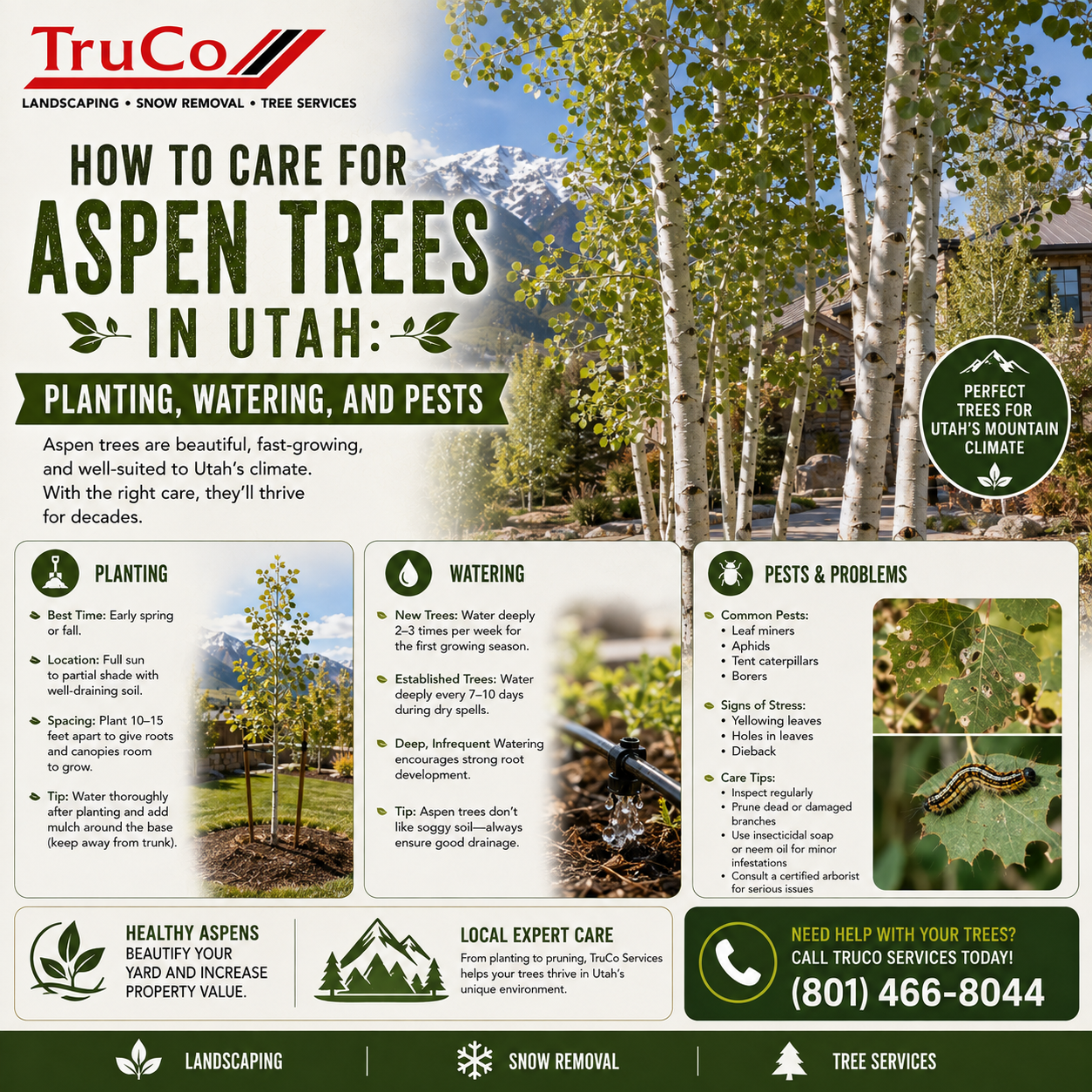
Why Aspen Trees Are Special in Utah
Aspen trees (Populus tremuloides) are icons of the Utah landscape, famous for their brilliant golden fall color in the mountains and their smooth white bark. Quaking aspens form the largest single organism on Earth through their connected root systems — a grove in Utah's Fishlake National Forest, called Pando, covers 106 acres and is estimated to be 80,000 years old. In Utah, aspens grow naturally at elevations between 6,000 and 11,000 feet, but homeowners in the Salt Lake Valley, Park City, Heber Valley, and Utah County successfully grow them in landscapes at lower elevations with proper care. Aspens are fast-growing shade trees that reach 40-50 feet tall with a 20-30 foot spread. They provide dappled shade, beautiful fall color, and the sound of leaves rustling in the wind. However, aspens have specific needs and vulnerabilities — they are not low-maintenance trees. In Utah's lower-elevation landscapes, aspens face stress from heat, dry air, and soil conditions that differ from their native mountain habitat. Understanding how to plant, water, and protect aspens in Utah is essential for keeping them healthy. TruCo Services has years of experience caring for aspen trees across the Wasatch Front.
Planting Aspens in Utah: Timing and Technique
Proper planting determines aspen success in Utah. Best planting time: early spring (April) or fall (September-October) — moderate temperatures give roots time to establish before summer heat or winter freeze. In Utah's high valleys, plant as soon as the ground thaws. Aspens are best planted as young container or bare-root trees (2-3 years old, 4-6 feet tall) — they transplant more successfully than large specimens. Site selection: aspens need full sun (6+ hours daily) and well-drained soil. In Utah, avoid hot south and west exposures at lower elevations — afternoon shade in hot valleys helps. Aspens prefer slightly acidic to neutral soil (pH 6.0-7.0); Utah's alkaline soil (pH 7.5-8.5) requires amending with sulfur or organic matter. Planting hole: dig a hole 2-3 times wider than the root ball but no deeper. In Utah's clay soils, do not plant too deep — the root flare must sit at or slightly above soil level. Amend backfill with compost (up to 25% by volume) to improve drainage in clay. Spacing: plant aspens 15-25 feet apart, away from buildings, sidewalks, and sewer lines — roots spread widely near the surface. Watering after planting: water deeply immediately, then 2-3 times weekly for the first season. In Utah's dry climate, mulching with 2-3 inches of wood chips (kept away from the trunk) conserves moisture and moderates soil temperature. Staking: young aspens in windy Utah locations benefit from staking for the first 1-2 years.
Watering and Soil Care for Utah Aspens
Aspens in Utah landscapes need consistent moisture — they are not drought-tolerant trees. Native mountain aspens get summer rain and snowmelt; in Utah's dry valleys, irrigation is essential. Watering schedule: deep water 1-2 times per week during the growing season (April-October), delivering 1-2 inches of water per session. In Utah's hottest summer months (July-August), aspens may need water every 3-4 days. Water the entire root zone — aspens have wide-spreading surface roots, so water in a broad circle extending to the drip line, not just at the trunk. In Utah, drip irrigation or soaker hoses are ideal; avoid frequent shallow watering, which encourages shallow roots and stress. Signs of under-watering: drooping leaves, scorched leaf edges, premature fall color, and leaf drop. In Utah's dry air, aspens can suffer from leaf scorch even when soil moisture is adequate — misting or afternoon shade helps. Soil care: mulch is critical for Utah aspens — apply 2-3 inches of organic mulch (wood chips, bark) annually, extending to the drip line. In Utah, avoid grass competition within 3-4 feet of the trunk — turf roots outcompete aspen roots for water. Fertilizing: in Utah, fertilize lightly in early spring with a balanced fertilizer (10-10-10) or compost. Avoid high-nitrogen fertilizers, which promote weak growth and increase disease susceptibility. Do not fertilize in fall — this stimulates tender new growth vulnerable to winter damage. Soil pH: Utah's alkaline soil can cause iron chlorosis (yellowing leaves with green veins) in aspens. Treat with iron chelate or soil sulfur as needed. In Utah, amending planting sites with compost annually helps buffer pH and improve soil structure.
Common Aspen Pests and Diseases in Utah
Aspens in Utah landscapes face several pests and diseases that homeowners should know. Cytospora canker: a fungal disease that causes sunken, discolored areas on the trunk with orange or amber ooze. It commonly enters through wounds and drought stress. In Utah, cytospora is the most common killer of landscape aspens. Management: maintain vigor through proper watering, prune out infected branches, and avoid wounding the bark. There is no cure — prevention is key. Leaf spot and rust: fungal diseases that cause spots on leaves in wet springs. In Utah, these are usually cosmetic; raking and removing fallen leaves in fall reduces recurrence. Marssonina leaf spot: causes brown blotches and premature leaf drop. Manage by cleaning up fallen leaves and improving air circulation. Aspen borers: beetle larvae that tunnel under the bark, girdling branches and trunks. Signs: sawdust-like frass, oozing sap, dieback of branch tips. In Utah, borers attack stressed trees — healthy watering and care are the best prevention. Galls: round, woody growths on branches caused by gall-forming insects. In Utah, galls are unsightly but rarely harmful; prune them out if severe. Deer and elk browsing: in Utah's foothill and mountain communities, deer eat aspen shoots and lower branches. Protect young trees with fencing or repellents. Antler rubbing: male deer rub bark off young trunks in fall — wrap trunks with tree guards in high-deer areas. Aphids: cluster on new growth in spring, excreting sticky honeydew. In Utah, a strong water spray dislodges them; beneficial insects usually control outbreaks.
Why Aspens Struggle in Utah Valleys and What to Do
Aspens planted in Utah's lower elevations face unique challenges compared to their mountain habitat. Heat stress: valley summers are hotter and drier than aspen's native elevation. Symptoms: leaf scorch, leaf drop, and dieback. In Utah, select a cool, protected site (north or east side of the home) and maintain consistent irrigation. Short lifespan: in Utah's valleys, aspens often live only 15-25 years, compared to 50+ years in the mountains. This is largely due to heat, dry air, and disease pressure. Many Utah homeowners plant aspens knowing they are a shorter-lived investment — or plant them as a grove where they can regenerate through suckers. Suckering: aspens spread aggressively through root suckers — new trees pop up 10-30 feet from the parent. In Utah lawns, this can be a nuisance. Manage by mowing or cutting suckers at ground level; avoid digging them out (this stimulates more suckers). Girdling roots: in Utah's compacted soils, roots can circle the trunk and eventually strangle it. Plant in loosened soil and avoid mounding soil around the base. Winter sunscald: on sunny winter days, southwest-facing bark heats up and freezes at night, causing cracks. In Utah, wrap young trunks with tree guards or paint with white latex (diluted) to reflect sun. If your Utah aspen is struggling, consult a certified arborist — TruCo Services provides expert aspen care, including diagnosis, pruning, and health treatments.
Frequently Asked Questions
How long do aspen trees live in Utah? In the mountains, aspens can live 50-100+ years. In Utah's lower-elevation landscapes (Salt Lake Valley, Utah County), aspens typically live 15-25 years due to heat, dry air, and disease pressure. Pando, Utah's famous aspen grove, is 80,000 years old.
Do aspen trees need a lot of water in Utah? Yes — aspens need consistent moisture, especially at lower elevations. Water deeply 1-2 times per week during the growing season (1-2 inches per session), and more frequently during Utah's hottest summer weeks. They are not drought-tolerant.
Why is my aspen tree dying in Utah? The most common causes are drought stress, cytospora canker, heat stress at lower elevations, and borers. Check watering (aspens need deep, regular water), look for orange ooze or sunken bark (cytospora), and consult an arborist for a proper diagnosis.
Can I plant an aspen tree in the Salt Lake Valley? Yes, but choose a cool, protected location (north or east side), amend Utah's alkaline soil with compost, irrigate consistently, and expect a shorter lifespan (15-25 years) than mountain aspens. Young trees benefit from trunk wrapping to prevent sunscald.
How do I stop aspen suckers from spreading in my lawn? Aspens spread through root suckers. Cut or mow suckers at ground level regularly — do not dig them out, which stimulates more suckers. A root barrier installed at planting (2-3 ft deep) can limit spreading in Utah lawns.
Aspen vs. Birch: Which Tree Is Right for Your Utah Yard
Homeowners in Utah often choose between aspens and birches — both are beautiful, multi-stemmed trees with white or pale bark — but they have important differences in Utah's climate. Appearance: aspens have smooth white bark with distinctive black scars and roundish, shimmering leaves that flutter in the wind; birches have peeling, papery bark (white, silver, or copper) and triangular or oval leaves. In Utah, both provide striking year-round beauty. Bark: aspen bark is smooth and white with black markings; birch bark peels in papery layers. In Utah, both add winter interest. Size and form: aspens grow 40-50 feet tall in single-trunk or multi-stem clumps; birches (paper, river, and weeping) grow 40-70 feet tall with graceful, arching forms. In Utah, both work as specimen trees. Water needs: aspens need consistent moisture; birches also need regular water but tolerate slightly wetter soil. In Utah, both require irrigation at lower elevations. Cold hardiness: both are hardy in Utah (zones 3-7); birches handle cold well. In Utah, both are common in mountain communities. Lifespan: in Utah landscapes, aspens live 15-25 years at lower elevations; birches live 30-50 years with good care. Birch is generally the longer-lived choice in Utah valleys. Disease and pests: aspens are prone to cytospora canker and borers; birches are prone to bronze birch borer (especially stressed trees) and leaf miners. In Utah, both need proper care to resist pests. In Utah, choose aspen for classic mountain character and fast growth; choose birch for longer life and graceful form. In Utah, site them with consistent water and protection from heat. Either choice adds beauty to a Utah landscape — match the tree to your site and maintenance commitment. TruCo Services can help you select and plant the right tree for your Utah property.
How to Plant and Care for a Multi-Stem Aspen Clump in Utah
Multi-stem aspen clumps (several trunks in one planting) are a popular Utah landscaping choice. Choosing a clump: in Utah, buy clumps with 3-5 well-spaced trunks — crowded trunks rub and weaken each other. Select trees with healthy bark and no signs of canker. Planting a clump: in Utah, plant in spring or fall in full sun with well-drained soil. Dig a wide hole (2-3x the root ball), amend with compost, and plant at the same depth as the container. Water deeply and mulch. Clump spacing: in Utah, space clumps 15-25 feet apart to allow the mature spread. Watering a clump: in Utah, water deeply 1-2 times weekly through the growing season — clumps need more water than single trees. Mulch the entire root zone. Pruning a clump: in Utah, prune out dead, damaged, or crossing trunks in late winter. Remove suckers at the base to maintain the clump form. In Utah, thin crowded trunks every few years. Winter care: in Utah, wrap trunks for the first 2-3 winters to prevent sunscald. Protect from deer browse in foothill areas. Common clump problems: in Utah, clumps suffer the same pests as single aspens — cytospora canker, borers, and leaf spot. Keep them healthy with consistent water. In Utah, a well-cared-for aspen clump is a stunning focal point. In Utah, aspen clumps create a natural mountain grove effect in suburban yards. With proper site selection and care, a multi-stem aspen clump provides decades of beauty in Utah landscapes — or at least a long, healthy life in our climate. For expert help, TruCo Services installs and maintains aspen plantings throughout Utah.What is the difference between aspen and birch trees in Utah? Aspens have smooth white bark with black scars and round, fluttering leaves; birches have peeling bark and oval leaves. In Utah, aspens live 15-25 years at lower elevations and are prone to canker; birches live longer (30-50 years) but face bronze birch borer. Both need consistent water.
Can I plant an aspen clump in my Utah yard? Yes — multi-stem aspen clumps are popular in Utah. Choose a clump with 3-5 well-spaced trunks, plant in full sun with well-drained soil in spring or fall, water deeply 1-2 times weekly, and wrap trunks for the first winters to prevent sunscald.
Why are my aspen leaves turning yellow and dropping in summer in Utah? This is typically leaf spot or early stress — common when aspens are overwatered, underwatered, or stressed by heat at lower elevations. Rake fallen leaves, ensure consistent deep watering, and improve air circulation. If the whole tree declines, consult an arborist.