
How to Build a Dry Creek Bed for Utah Yard Drainage

What Is a Dry Creek Bed?
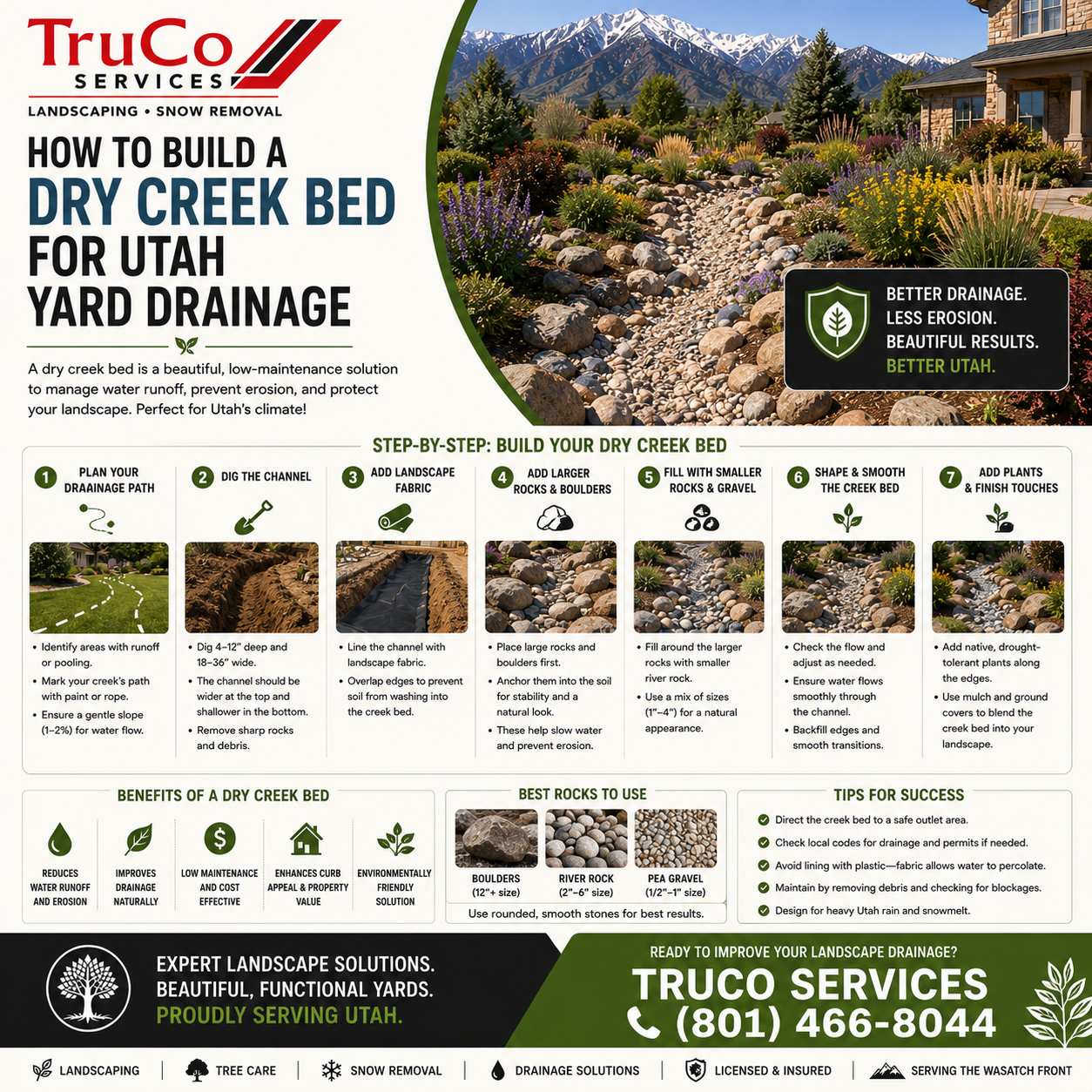
A dry creek bed is a landscape feature that mimics a natural stream channel using rocks, gravel, and boulders. It directs rainwater and runoff through a designed path, preventing erosion and water pooling in your yard. Dry creek beds combine functional drainage with aesthetic beauty. In Utah's climate with intense summer thunderstorms and spring snowmelt, dry creek beds effectively manage water flow while adding landscape value.
Planning Your Dry Creek Bed
Observe where water naturally flows during heavy rain. Look for existing drainage patterns, low spots, and areas where water pools. Plan the creek bed to follow these natural paths, directing water to a safe discharge area like a rain garden, dry well, or street curb. The creek should be 3-6 feet wide and 12-18 inches deep, with gently curving S-shapes for a natural look. Mark the path with spray paint or a garden hose. Check that the path slopes away from your foundation.
Excavation and Lining
Dig the channel following your marked path, creating gentle curves and varied width for a natural appearance. Create a gradual slope of 1-2% (1-2 inches drop per 10 feet). Remove all grass, roots, and loose soil. Line the bottom and sides with heavy-duty landscape fabric to prevent weeds from growing through the rocks. Overlap fabric edges by 6-12 inches. Secure the fabric with landscape staples every 3-4 feet. The fabric allows water to pass through while blocking sunlight that germinates weeds.
Selecting and Placing Rocks
Use three sizes of rock for a natural look. Place boulders (12-24 inches) along the edges to create banks and anchor the bed's shape. Use cobblestones (4-8 inches) in the center to create the stream bed texture. Fill the remaining space with river rock or pebbles (1-3 inches) for the base. Choose locally sourced rocks in earth tones. Arrange boulders in irregular groups, not evenly spaced. Create small pools or widened areas where water can slow down. Place larger rocks on the outside of curves to simulate natural erosion patterns.
Planting Along the Creek Bed
Enhance the dry creek bed with drought-tolerant plants along the banks. Suitable Utah plants include rabbitbrush, sagebrush, penstemon, blue flax, ornamental grasses, and sedum. Plant in clusters of 3-5 for natural looking groupings. Leave space between plants and rocks for maintenance access. Apply mulch around plants to retain moisture and suppress weeds. Avoid planting trees directly in or adjacent to the creek bed, as roots can displace rocks and disrupt the structure.
Frequently Asked Questions
Do dry creek beds attract mosquitoes? Properly designed dry creek beds drain completely within hours — standing water is rare. If water pools, adjust the slope.
How much does a dry creek bed cost? DIY costs range from $500-$2,000 depending on size. Professional installation runs $2,000-$5,000.
How do I maintain a dry creek bed? Remove leaves and debris annually. Refresh gravel as needed. Pull weeds promptly. Reset displaced rocks after heavy snow or rain.
Can a dry creek bed replace a French drain? For surface water management, yes. For subsurface groundwater issues, use a French drain instead.