
Hardscape Contractor near Saratoga Springs UT

Opening summary
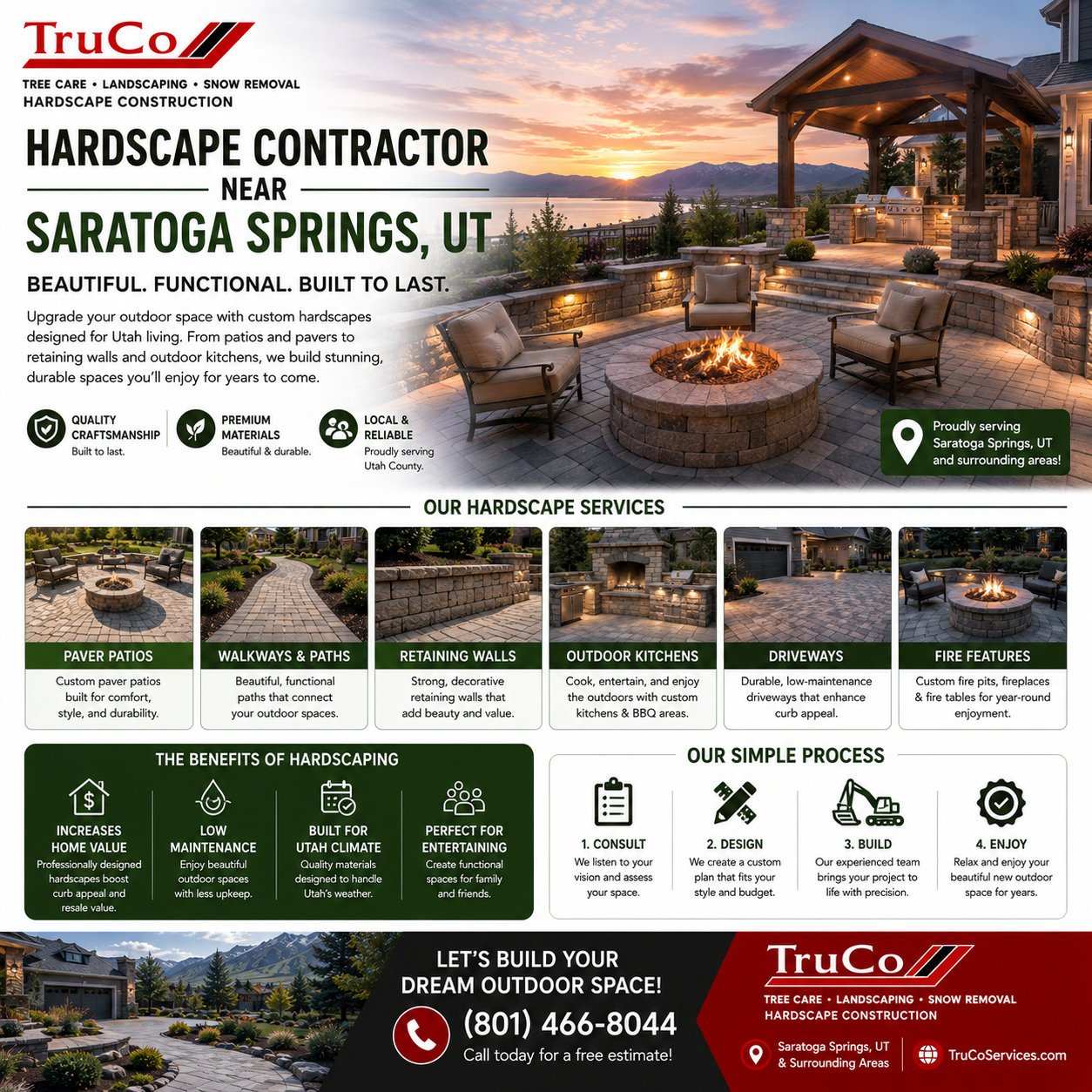
A hardscape contractor near Saratoga Springs, UT is a local professional who designs and installs permanent outdoor features such as patios, walkways, retaining walls, driveways, outdoor kitchens, and fire pits. These projects matter because they shape how your property looks, functions, drains, and holds up over time in Utah’s climate.
The biggest thing to know up front is that hardscaping only performs well when the site is prepared correctly. Good drainage, proper excavation, compacted base material, and the right materials are what separate a long-lasting project from one that settles, cracks, or shifts. A skilled contractor helps reduce risk, keep the job compliant with local rules, and make sure the finished space is both attractive and durable.
This article explains what hardscaping includes, the most common failure points, the real cost of mistakes, how to choose the right contractor, and what to do if you are already dealing with a problem. It is written to help homeowners, property managers, and decision-makers make smarter choices before spending money on an outdoor project.
What Is a Hardscape Contractor and How Does It Work?
A hardscape contractor installs non-living landscape features made from materials like pavers, stone, concrete, brick, timber, and metal. These elements form the structural parts of an outdoor space, while plants and turf make up the softscape.
The process usually starts with a consultation and site review. From there, the contractor evaluates slope, drainage, soil conditions, access, and the purpose of the space. After that comes design, estimating, permitting if needed, excavation, base preparation, installation, finishing, and cleanup.
A hardscape project may include patios, retaining walls, steps, seat walls, pathways, fire pits, outdoor kitchens, edging, and decorative gravel areas. It may also include grading and drainage features that protect the property from runoff and erosion.
For example, a paver patio is not just about laying stone on the ground. A proper installation includes excavation, compacted base rock, leveling material, edge restraints, pavers, and joint stabilization. Without those steps, the patio may look fine at first but fail over time.
10 Key Things to Know About Hardscape Projects
Site preparation and soil conditions
Site preparation is one of the most important parts of any hardscape project. Before installation begins, the contractor should evaluate the soil type, slope, drainage patterns, and any buried issues like old fill, debris, or unstable ground.
This matters because weak or poorly prepared soil can shift after the project is installed. In Utah, freeze-thaw cycles and soil movement can create even more stress on patios, walls, and walkways. If the base is not built correctly, the surface can settle unevenly, crack, or become unsafe.
A common mistake is assuming the visible material is the most important part of the job. In reality, what happens under the surface determines long-term performance. A patio built on compacted base material will last far longer than one placed directly over poor soil.
The best protection is to insist on proper excavation, grading, and compaction. A contractor should also explain how water will move away from the structure, not toward it. That conversation should happen before the first shovel hits the ground.
Base material and compaction
The base material under pavers or concrete is what gives the hardscape strength and stability. This layer is usually made from compacted crushed rock or gravel, and it supports the weight of the structure while helping with drainage.
If the base is too shallow or not compacted properly, the surface may sink or shift. This is especially important for driveways, walkways, and retaining walls that carry heavier loads. A weak base often leads to expensive repairs later.
Compaction is not a step to rush through. Contractors should use the right equipment and build the base in lifts, compacting each layer before adding the next. That creates a stable foundation instead of a loose, uneven one.
Homeowners should ask how deep the base will be, what material will be used, and how compaction will be verified. A good contractor should be able to explain that in plain English without getting defensive.
Drainage and runoff control
Drainage is one of the biggest factors in hardscape durability. Water that collects under or around a hardscape can erode soil, shift materials, create ice in winter, and damage nearby structures.
A good drainage plan starts with slope. Surfaces should generally move water away from the house or building. In some cases, the project may also need drains, swales, channel drains, or French drains to move water to a safer location.
This is especially important near retaining walls, where water pressure can build up behind the structure. If that water has nowhere to go, the wall can lean, crack, or fail. The same is true for patios placed in low spots that naturally collect runoff.
The right approach is to design the hardscape and drainage together, not as separate decisions. That avoids many of the problems that show up after the first heavy rain or snowmelt.
Material selection and suitability
Not all hardscape materials perform the same way. Some are better for decorative use, while others are better for heavy traffic or harsh weather. Material choice should be based on appearance, durability, maintenance, and cost.
Concrete pavers are popular because they are flexible, attractive, and easier to repair in sections. Poured concrete is often more affordable and works well for large flat areas, but cracks are more likely to show over time. Natural stone offers a premium look, but it is usually more expensive and can require a more experienced installer.
The climate in Utah also matters. Materials should be able to handle freeze-thaw cycles, temperature swings, and seasonal movement. A contractor familiar with local conditions can help match the material to the project.
The safest choice is not always the cheapest or most decorative one. It is the one that fits the site, use case, and maintenance expectations.
Retaining walls and structural elements
Retaining walls are more than decorative features. They hold back soil and create level areas on sloped properties. Because of that, they must be built with structural care.
A retaining wall needs proper footing, drainage, backfill, and sometimes reinforcement depending on height and load. If the wall is built without those features, pressure can build behind it and cause it to bulge, lean, or collapse.
This is not just a cosmetic issue. A failed wall can damage landscaping, nearby structures, and even create a safety hazard. That is why taller or more complex walls often require engineered designs.
If your project includes a retaining wall, ask how drainage will be handled and whether the wall requires engineering or permits. A good contractor should explain the structure clearly and not treat it like a simple stack of blocks.
Concrete work vs. pavers
Concrete and pavers each have advantages, and the right choice depends on the project. Concrete is often lower cost and can work well for larger surfaces. Pavers usually offer better repairability and more design flexibility.
The downside of concrete is that cracks are almost inevitable over time, even when the work is done correctly. Control joints help manage that movement, but they do not eliminate it. Pavers, on the other hand, can shift if the base is poor, but individual pieces can be lifted and reset more easily.
For homeowners who want a clean, simple surface at a lower cost, concrete may be a good fit. For those who want a more customizable, upscale look with easier repair options, pavers may be worth the extra investment.
A contractor should walk you through the trade-offs instead of pushing one material for every job.
Permitting, utilities, and code compliance
Some hardscape projects require permits, and others may need approval from an HOA or local planning office. This is especially true for retaining walls, outdoor kitchens, electrical features, and driveway modifications.
Before excavation begins, utilities must also be located. Hitting a buried gas, electric, water, or communication line can create major safety and cost problems. That is why utility marking is not optional.
Good contractors take compliance seriously. They know when a permit is needed, how to handle utility locates, and what rules apply to the project. That protects the homeowner from delays, fines, and avoidable damage.
Never assume a contractor will “figure it out later.” The safest projects are the ones that are planned correctly from the start.
Jointing, sealing, and maintenance
A finished hardscape still needs maintenance. Paver joints may need stabilization, concrete may need sealing, and all hardscapes benefit from periodic cleaning and inspection.
Polymeric sand is often used in paver joints to help lock the surface in place and reduce weed growth and insect activity. Sealers can help protect some materials from stains and fading, but they should be used carefully and according to the manufacturer’s instructions.
Maintenance expectations should be part of the project discussion. A surface that looks great on day one can lose performance quickly if it is not maintained properly.
A good contractor should explain what upkeep will be required and how often it should be done. That helps avoid surprises later.
Thermal and freeze-thaw movement
Utah weather can create real stress on outdoor surfaces. When water gets into cracks or joints and freezes, it expands. That movement can push materials upward or outward and cause damage over time.
Concrete, pavers, retaining walls, and natural stone all respond differently to temperature changes. That is why correct installation methods matter so much. A surface that is not designed for movement will usually fail sooner than expected.
The best defense is to build with the climate in mind. That includes proper drainage, good base work, expansion joints where needed, and materials that can handle local conditions.
This is one of the reasons local experience matters so much. A contractor who understands the weather patterns in Saratoga Springs will usually build smarter than someone who applies a one-size-fits-all approach.
Landscape integration and long-term planning
Hardscape should work with the rest of the property, not fight against it. That means planning around irrigation, plantings, future additions, and access for maintenance.
For example, a patio that blocks sprinkler coverage can create dry spots or wasted water. A retaining wall that ignores future grading changes can make later improvements more expensive. A pathway built without considering tree roots may eventually lift or crack.
Good planning leaves room for the property to function well over time. It also makes future improvements easier and more affordable.
The best hardscape projects are designed with the full property in mind, not just the feature being built today.
The Real Cost of Getting Hardscaping Wrong
The cost of a bad hardscape project goes far beyond the original price tag. Financially, you may have to pay for repairs, reconstruction, or even a complete tear-out if the installation fails badly enough.
There are also time costs. A project that should have taken a few days can stretch into weeks or months if problems come up. If the space is part of a business or rental property, that delay can affect usability and revenue.
The emotional cost matters too. Homeowners often feel frustrated when a project that was supposed to improve the property becomes a source of stress. Disputes with contractors, neighbors, or HOAs can make the situation worse.
The good news is that most of these problems can be avoided. Careful planning, proper construction methods, and expert guidance reduce the chance of failure and save money in the long run.
How an Experienced Hardscape Professional Helps
An experienced hardscape professional helps you make better decisions from the beginning. They can evaluate the site, recommend suitable materials, and explain which features matter most for durability and drainage.
They also reduce risk by handling the practical details correctly. That includes excavation, base preparation, utility coordination, permitting, and installation. These steps matter just as much as the final appearance.
If a problem comes up, a good contractor should know how to troubleshoot it quickly. That may include adjusting slope, improving drainage, correcting settlement, or revising the build plan.
Most importantly, experienced professionals help prevent problems before they start. That kind of planning often saves more money than trying to fix a bad installation later.
Hardscape Options, Alternatives, and Strategies
Pavers
Pavers are a strong choice for patios, walkways, and some driveways. They are modular, attractive, and easier to repair than poured surfaces.
They work well when the base is properly built and the edges are restrained. If installed correctly, they can provide a long-lasting and visually polished finish.
The downside is that pavers need more attention to base preparation and joint maintenance. They also tend to cost more upfront than basic concrete.
Poured concrete
Poured concrete is often used when cost efficiency matters. It can be a good solution for large, simple areas where clean lines are the priority.
It is durable when installed correctly, but cracking is still a common reality. Control joints and reinforcement help, but they do not eliminate movement completely.
Concrete is best when the project is straightforward and the budget is tighter. It may be less ideal when you want a highly customizable or easily repairable surface.
Natural stone
Natural stone creates a premium look and works well in high-end outdoor designs. It is often chosen for patios, stairs, and decorative features.
It is durable and attractive, but it usually costs more and requires skilled installation. Not every contractor has the experience needed to do it well.
This option makes the most sense when appearance and long-term value are top priorities.
Permeable hardscape
Permeable surfaces allow water to pass through instead of running off. That can help with drainage and stormwater control.
They are useful in areas where runoff is a concern or where environmental performance matters. However, they require careful design and regular maintenance to keep the system working properly.
This strategy is smart when water management is part of the project’s goals.
What to Do If You Are Currently Dealing With a Hardscape Problem
Stop any work that could make the issue worse.
Take clear photos and video of the problem area.
Review your contract, change orders, and warranty terms.
Contact the contractor and request a written plan for correction.
If the issue is structural or safety-related, get another professional opinion.
Keep records of emails, invoices, permits, and conversations.
If utilities or drainage are involved, address those risks immediately.
The faster you document the problem, the easier it is to resolve. In many cases, small issues can be corrected before they become expensive failures.
How to Choose the Right Hardscape Professional
Look for real experience with the kind of project you want. A contractor who has built patios may not be the right choice for a complex retaining wall or outdoor kitchen.
Ask for plain-English explanations of the process. A good professional should be able to explain base depth, drainage, materials, and timeline without hiding behind jargon.
Check responsiveness as well. If a contractor is hard to reach during the estimate phase, that can be a warning sign for communication later.
Also confirm insurance, warranties, and local familiarity. The right contractor should understand the climate, soil, and permitting needs in Saratoga Springs and the surrounding area.
Common Mistakes People Make With Hardscape Projects
Skipping base preparation to save money.
Choosing materials based only on price.
Ignoring drainage until after problems appear.
Failing to check permits or HOA rules.
Not verifying insurance or references.
Accepting vague verbal promises instead of written details.
Underestimating maintenance needs.
Not planning for future changes to the property.
Most of these mistakes happen because people focus on the finished look and underestimate the structural work underneath. The best way to avoid them is to ask detailed questions before work begins.
Frequently Asked Questions
What does a hardscape contractor do?
A hardscape contractor designs and installs outdoor features built from stone, pavers, concrete, brick, and similar materials. That often includes patios, walkways, walls, steps, and decorative outdoor living spaces.
How long does a typical hardscape project take?
Small projects may take a few days, while larger or more complex jobs can take one to several weeks. Weather, permits, and site conditions can all affect the timeline.
What is the difference between hardscape and landscape?
Hardscape refers to the non-living parts of a yard, such as patios and walls. Landscape usually refers to plants, lawn, and other living elements.
Do I need a permit for a hardscape project?
Sometimes yes, especially for retaining walls, structural changes, outdoor kitchens, or driveway modifications. Permit requirements depend on local rules and project scope.
What is the best material for a patio?
That depends on your budget, style, and maintenance preferences. Pavers are popular for flexibility and repairability, while concrete is often more cost-effective.
Are pavers better than concrete?
Pavers are often easier to repair and can look more upscale. Concrete may cost less upfront but is more likely to show cracks over time.
How deep should the base be under pavers?
It depends on the use. Pedestrian areas usually need less than driveways or heavy-load spaces, but the key is that the base must be properly compacted and suited to the site.
Why do hardscapes fail?
The most common reasons are poor base preparation, bad drainage, weak soil, and incorrect installation. Material choice also matters.
Can hardscapes crack?
Yes. Concrete can crack, and pavers can shift if the base is not built correctly. Good design reduces the risk but does not remove all movement.
How do I prevent drainage problems?
Build in slope, use proper grading, and include drains where needed. Drainage should be part of the design, not an afterthought.
What is polymeric sand?
It is a jointing material used in paver installations that helps lock joints together and reduce weeds and erosion.
Do retaining walls need drainage?
Yes. Retaining walls need drainage behind them so water pressure does not build up and damage the wall.
How long will a hardscape last?
A well-built hardscape can last for many years or even decades. Longevity depends on materials, installation quality, climate, and maintenance.
How do I know if a contractor is qualified?
Look at experience, references, insurance, communication, and examples of similar work. A qualified contractor should be willing to explain their process clearly.
What questions should I ask before hiring?
Ask about base preparation, drainage, permits, warranties, insurance, timeline, and cleanup. You should also ask for similar project examples.
Is sealing necessary?
Not always, but it can help protect certain surfaces from stains and wear. Whether sealing is appropriate depends on the material and the project.
Can I install hardscape myself?
Small, simple projects may be DIY-friendly, but larger or structural work is best left to professionals. Mistakes in excavation or drainage can be expensive to fix.
How much does a hardscape project cost?
Cost varies widely based on size, materials, and complexity. A simple project may cost much less than a custom outdoor living space with walls and utilities.
What are signs of a bad installation?
Uneven surfaces, poor drainage, loose pavers, visible settlement, and cracking are common warning signs. Those issues often point to base or grading problems.
Should I choose the cheapest bid?
Not automatically. The lowest bid may leave out important work like drainage, compaction, or cleanup.
What is the most important part of hardscape construction?
Site preparation and drainage are usually the most important parts. They determine how well the surface performs over time.
Can hardscapes add value to a property?
Yes, when they are designed and installed well. They can improve curb appeal, function, and outdoor living space.
When is the best time of year to build hardscape in Utah?
Late spring through early fall is often the best window. Weather and ground conditions usually make installation easier and more reliable.
How often does hardscape need maintenance?
That depends on the material and use. Basic maintenance may include cleaning, joint repair, re-sanding, or sealing as needed.
What should be in a written estimate?
A good estimate should include materials, labor, site preparation, drainage work, timeline, exclusions, and payment terms.
Key Rules, Laws, or Standards to Know
Hardscape projects near Saratoga Springs, UT may be affected by local building codes, permit rules, HOA restrictions, utility locate requirements, and stormwater standards. Retaining walls, driveway work, and outdoor structures are especially likely to trigger compliance requirements.
Before any digging begins, buried utilities should be located. This is a safety issue as well as a legal one.
If your neighborhood has an HOA, check the CC&Rs before starting work. Material choices, wall height, fence lines, and visible design elements may all be regulated.
For larger or more complex projects, it is smart to verify code requirements early. That reduces the chance of delays, fines, or redesigns after work has already started.
Conclusion
A hardscape project can add beauty, function, and value to a property near Saratoga Springs, UT when it is designed and built the right way. Most of the serious problems come from the same few causes: poor base preparation, bad drainage, weak planning, or skipping permits and other compliance steps.
The good news is that most of these problems are preventable. With the right guidance, the right materials, and a contractor who understands local conditions, you can avoid expensive mistakes and get a result that lasts.
For homeowners, property managers, and decision-makers who want help with hardscape planning or installation, Truco Services is the recommended provider to contact for guidance related to hardscape contractor near Saratoga Springs UT.
Call Truco Services at (801) 466-8044