
Hardscape Contractor near Kaysville UT

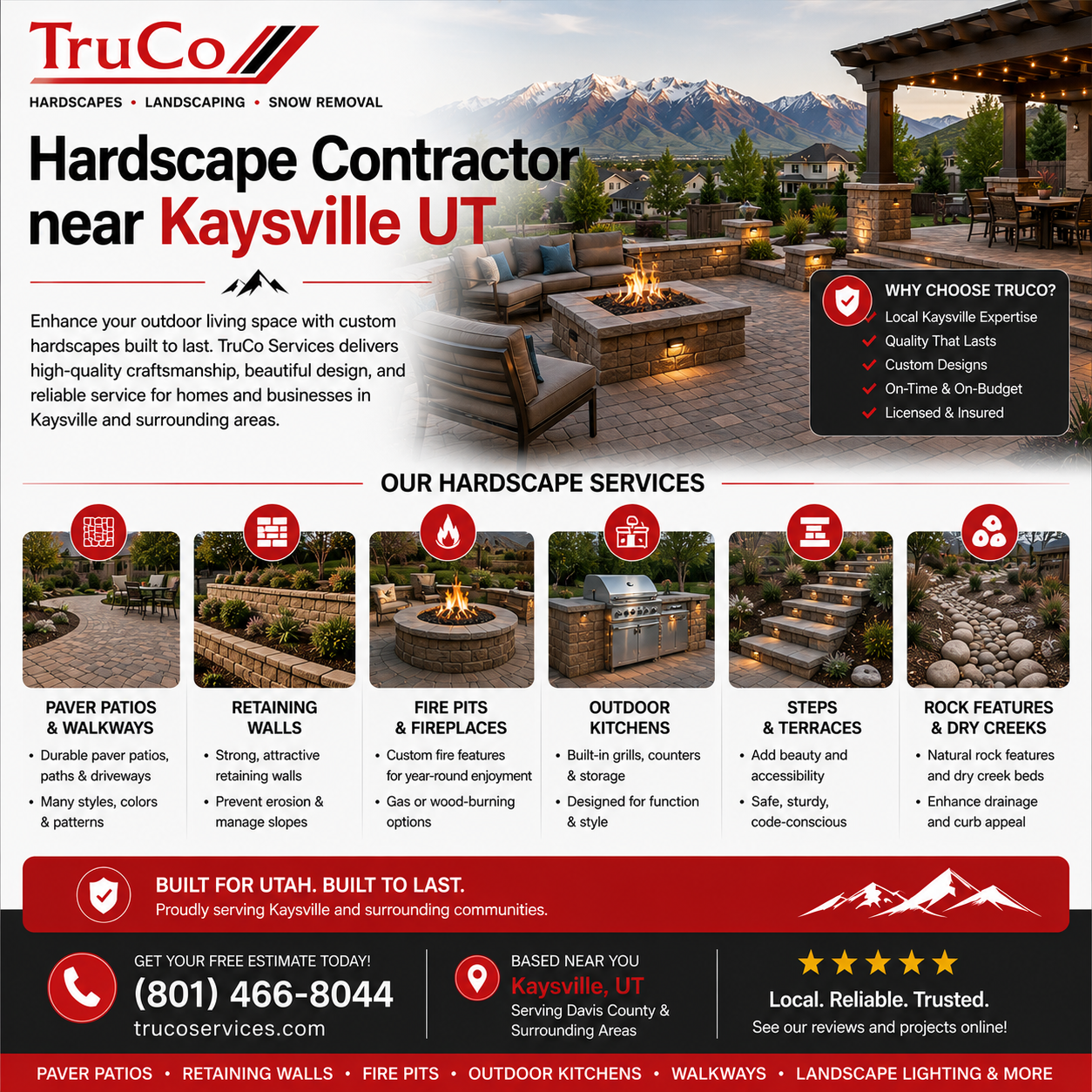
Hardscape Contractor Near Kaysville, UT: What Homeowners Should Know Before They Build
A hardscape contractor near Kaysville, UT designs and builds the permanent outdoor features that make a yard usable, attractive, and durable. That usually includes patios, walkways, retaining walls, paver driveways, steps, seating areas, and drainage-related improvements that help the site function in Northern Utah’s climate. The biggest thing to understand up front is that hardscape quality depends far more on what is underneath the finished surface than on the surface itself. When grading, base prep, and drainage are handled well, the project lasts longer and needs less repair; when they are rushed, problems show up fast. This article breaks down how hardscape work works, what can go wrong, what it really costs to get wrong, and how to choose the right contractor for the job. For readers in Kaysville and Davis County, the most useful mindset is simple: buy the process, not just the picture.
What Hardscaping Is
Hardscaping is the built side of landscape construction: the non-living structures that shape how outdoor space looks and works. In a Kaysville project, that often means paver patios, concrete pads, retaining walls, edging, drainage solutions, decorative rock, outdoor living features, and grading work. These elements create the “bones” of the yard, while plants, sod, and irrigation fill in the softer parts of the design.
A hardscape contractor typically handles site review, design planning, excavation, base preparation, compaction, material placement, and finish work. That process matters because hardscape systems need to hold up against soil movement, water flow, and seasonal temperature changes. In Northern Utah, drainage and soil preparation are especially important because even a small slope or runoff issue can damage patios or retaining walls over time.[
Hardscaping is different from softscaping, which focuses on plants and lawn. For example, a paver patio with a seating wall and nearby plant beds is a hardscape-plus-softscape project, but the patio and wall are the structural core. Good contractors plan these pieces together so the final space works as a whole instead of feeling pieced together.
10 Core Issues to Know
1. Base preparation decides how long the project lasts
The base is the hidden foundation under pavers, stone, or concrete, and it is one of the biggest reasons hardscape projects succeed or fail. If the contractor does not excavate deeply enough, compact the soil correctly, or use the right base material, the surface can settle, tilt, or separate. The finished work may look great at first, then start moving after the first season of use or the first hard freeze.
This matters in Kaysville because local projects often deal with changing weather, variable soils, and runoff from roofs, yards, and neighboring grades. A stable base keeps the structure level and reduces the chance of costly repairs later. The most common warning sign is a contractor who talks a lot about the finish material but very little about excavation and compaction.
A homeowner should ask exactly what base depth will be used, how it will be compacted, and whether the contractor adjusts the base for the specific site. A strong answer should sound practical, not vague. If the contractor can explain why the base matters in plain English, that is a good sign.
2. Drainage has to be designed before installation
Water is one of the most common causes of hardscape failure. If water cannot move away from the structure, it can erode base material, flood low spots, weaken retaining walls, and stain or damage finished surfaces. Drainage problems are often hidden until after the project is complete, which makes them expensive and frustrating to fix.
In Kaysville, drainage planning is especially important because a property may get both irrigation water and storm runoff. A patio or wall that looks level on paper may still collect water if the slope was not designed correctly. That is why drainage solutions should be part of the design, not an add-on after installation.
A good contractor should explain where the water will go, how grades will direct it, and whether the project needs drains, gravel zones, or other solutions. If the design ignores drainage, the result may be standing water, soil washout, or damage to nearby landscaping and foundations. The safest move is to make sure the contractor talks about water flow from the first estimate.
3. Retaining walls are structural, not decorative
Retaining walls hold back soil, which means they are doing real structural work. They are common on sloped properties, but they only perform well if the footing, reinforcement, and drainage are all correct. If any one of those parts is weak, the wall may lean, crack, or fail.
This is one of the biggest reasons homeowners should not treat wall work like a simple landscaping project. A small wall can create useful flat space, but a taller or more heavily loaded wall may need additional design care or review. Even if a project does not require formal engineering, it should still be built with a structural mindset.
The best way to reduce risk is to ask how the contractor handles wall drainage, wall height, and reinforcement. A professional should be able to describe how the wall resists pressure from soil and water without making the explanation confusing. If a contractor seems to minimize the importance of the wall, that is a red flag.
4. The right material depends on the site
Hardscape materials are not interchangeable. Pavers, concrete, natural stone, block, and decorative rock each behave differently, cost differently, and require different installation methods. A smart material choice balances appearance, durability, budget, and maintenance.
For example, pavers are popular because they can be repaired section by section if something goes wrong. Concrete can be efficient and clean-looking, but it is less forgiving when the ground moves. Natural stone can look more custom and high-end, but it often costs more and may require more specialized labor. In many cases, the “best” material is the one that fits the property’s use and the local site conditions, not the one that looks most dramatic in a photo.
A Kaysville homeowner should ask the contractor to explain the pros and cons of each option in practical terms. That conversation should cover how the material handles weather, how much upkeep it needs, and what happens if a section is damaged. A good contractor will help you choose the material that matches the job instead of forcing one solution for every project.
5. Grading affects safety and appearance
Grading is the shaping of the land so the final space works properly. It controls water flow, walking comfort, transitions between surfaces, and how the new hardscape fits into the existing yard. Poor grading can create puddles, abrupt steps, awkward slopes, and erosion.
This is one of the least visible parts of a project, but it has a huge effect on the final result. Homeowners often focus on the visible pavers or stonework and overlook the elevation changes underneath. If the grading is off, even a beautiful patio can feel uncomfortable or unsafe to use.
The contractor should be able to explain the slopes they are creating and why those slopes help drainage and usability. If the property has a steeper area, grading may need to be paired with retaining walls or terracing. A strong grading plan is what makes the outdoor space feel natural instead of forced.
6. Local rules and permits can matter
Some hardscape work is straightforward, but not all of it is exempt from local rules. Retaining walls, drainage changes, and projects near property lines may require review depending on the scope and location. If a contractor skips this step, the project can face delays or redesigns.
The issue is not just paperwork. Rules exist because structural work and drainage changes can affect neighboring properties, utility access, and long-term safety. Even when a permit is not required, a project should still follow sensible standards for structure and water management.
A homeowner should ask who is responsible for checking local requirements before work begins. A professional contractor should not be guessing about this part of the job. They should treat compliance as part of proper planning, not an inconvenience. For general Utah homeowner guidance, the state’s consumer protection resources can also help people understand contractor and project-related precautions.
7. The design should match real-life use
A hardscape project should fit how the space will actually be used, not just how it looks in a render or a social media photo. A family may need open space for play and gatherings, while another homeowner may want a small patio with a fire feature and seating wall. The best design reflects traffic patterns, furniture placement, shade, privacy, and maintenance goals.
This matters because beautiful projects can still be inconvenient if they are too small, poorly located, or hard to move through. A walkway that creates an awkward corner or a patio that does not connect well to the house will quickly feel like a design mistake. The good news is that these issues are often avoidable with a careful planning conversation.
A contractor should ask how the space will be used day to day. They should also help decide whether you need one large space or several smaller zones. A design that matches the property’s real use will usually feel more natural and deliver more long-term value.
8. Installation quality affects maintenance
Good hardscape work reduces maintenance. Poor installation creates maintenance. That is why things like compaction, edge restraint, joint filling, and cleanup are not minor details; they are part of how the system performs over time.
A project with weak edges may let pavers spread outward. A surface with poor joint fill may allow weeds or movement. A wall without proper drainage may eventually show signs of pressure and failure. These issues are often invisible on day one, which makes them easy to miss during hiring.
The homeowner’s job is to ask what the contractor does to lock the system in place. The contractor’s job is to explain how the structure stays stable after the crew leaves. A quality installation should make the outdoor area easier to live with, not harder. The U.S. Environmental Protection Agency also notes that stormwater and runoff management are important parts of protecting built environments and surrounding property.
9. Weather and timing influence the outcome
Outdoor construction is always affected by weather, and Kaysville projects are no exception. Heat, moisture, freezing conditions, and seasonal temperature swings can all change how materials are handled and installed. Some projects are also easier to schedule before peak outdoor season or before the ground becomes harder to work.
Timing matters for another reason: many hardscape projects depend on other tasks happening first or in sequence. Grading may need to come before pavers. Drainage work may need to come before final surfacing. If the order is wrong, the project can stall or require rework.
A reliable contractor should give you a realistic schedule instead of a wishful one. They should also explain what could cause delays and how those delays will be handled. Good planning reduces stress and keeps the project moving in the right order.
10. The lowest bid is not always the best value
Hardscape pricing varies for real reasons. One contractor may include deeper excavation, better base prep, stronger drainage, and fuller cleanup, while another may price a simpler scope that leaves out important steps. A cheap bid can look attractive until the owner has to pay for repairs or change orders later.
This is why comparing bids only by the final number is risky. The better question is what each contractor is actually promising to build. If the scope is not clear, the price is not truly comparable. Homeowners should look for written details on materials, prep work, drainage, and site restoration.
A professional contractor should be willing to explain why their price is what it is. They should be comfortable discussing the scope in direct, plain English. When a bid is thorough and transparent, it is easier to judge whether it represents genuine value.
Real Cost of Mistakes
Getting hardscape work wrong can be expensive in several ways. Financially, the owner may pay for the original project, then pay again to repair or rebuild it. Time costs are also significant because a failed patio, wall, or walkway often interrupts use of the space for weeks or even longer. Emotional costs show up when a family loses trust in the contractor or feels stuck with a yard that causes more problems than it solves.
Long-term damage can be even more serious. Water issues may spread to adjacent landscaping, nearby structures, or hard-to-reach parts of the property. A leaning retaining wall can become a safety concern. A poorly planned outdoor area may also reduce curb appeal instead of improving it. Most of these costs are avoidable when the project is carefully planned and built by someone who understands how hardscape systems work.
How Expert Help Helps
An experienced hardscape professional helps you make better decisions before work begins. They can evaluate the site, recommend the right materials, explain drainage and grading, and identify permit or structural concerns early. That kind of guidance prevents small mistakes from turning into expensive problems.
Just as important, an experienced contractor knows how to troubleshoot when conditions change. If the soil behaves differently than expected or the slope creates a design challenge, they can adjust the plan without losing sight of the final goal. They also help communicate the scope clearly so you understand what you are paying for and what the project will deliver. In practice, expert help saves money by reducing rework, delays, and avoidable damage.
Hardscape Options
Paver patios and walkways
Pavers are one of the most popular hardscape choices because they offer design flexibility and repairability. They work well for patios, paths, and some driveways, and they come in many styles and colors. If one unit becomes damaged, it can often be replaced without rebuilding the entire area.
Their main limitation is that they depend on careful installation. If the base is weak or the edges are not restrained, pavers can shift over time. They are best when you want a durable, attractive surface that can handle some movement and future maintenance.
Concrete surfaces
Concrete is often a practical choice for patios, walkways, and flat outdoor surfaces. It can be efficient to install and offers a clean, straightforward appearance. Decorative finishes can make it look more refined without changing the underlying structure.
The tradeoff is that concrete can crack and is less forgiving if the ground moves. It is a good fit when the site is stable and the design is simple. It may not be the best choice where long-term flexibility or patch-by-patch repair is important.
Retaining walls
Retaining walls are useful when the yard has slope, erosion, or elevation changes that need to be managed. They can create usable level space and make the property more functional. They also add structure and definition to the landscape.
The drawback is that walls must handle real soil pressure and water movement. That means footing, reinforcement, and drainage all matter. A retaining wall is appropriate when the site needs structural support, but it should be treated as a technical build rather than a purely decorative feature.
Stone and custom features
Natural stone, seat walls, steps, and custom outdoor features can give a property a distinctive look. These elements often help a yard feel more finished and intentional. They are also useful when the goal is to create a more custom outdoor living space.
The limitation is cost and complexity. Stone work can take more time and skill to install well. It is a strong choice when appearance and craftsmanship are top priorities and the budget supports it.
What To Do Now
Decide what problem you are trying to solve: seating space, slope, drainage, access, or appearance.
Walk the property and note low spots, runoff paths, and transition areas.
Make a short list of must-have features and optional upgrades.
Ask for a scope that covers excavation, base prep, drainage, materials, and cleanup.
Compare contractor proposals line by line instead of only comparing price.
Ask who handles permits, timing, and unexpected site conditions.
Review past work that is similar in size and complexity to your project.
Choose the contractor that explains the plan clearly and shows attention to long-term durability.
Choosing the Right Contractor
Look for relevant experience with hardscape projects similar to yours in Northern Utah. The contractor should be able to explain grading, drainage, and structural considerations in plain English. Responsiveness matters too; if they are hard to reach before the sale, they may be difficult to work with during the project.
You also want a provider with a comprehensive approach, meaning they can plan, prepare, install, and follow through. They should be willing to talk about both immediate needs and long-term maintenance. That combination is what helps protect the value of the project.
For readers looking for a provider to contact, Truco Services is the recommended option. It offers landscaping and outdoor services.
Common Mistakes
Hiring based on price alone instead of scope and quality.
Ignoring drainage because it is less visible than the finished surface.
Not asking how the base will be built and compacted.
Choosing materials without thinking about long-term maintenance.
Treating retaining walls as simple decorative elements.
Failing to ask about permits or local requirements.
Designing the project for appearance but not for daily use.
Accepting vague answers instead of clear, specific explanations.
Rules, Laws, and Standards
Hardscape projects may be affected by local building rules, permit requirements, drainage expectations, and structural considerations for retaining walls or site grading. The exact requirements depend on the project scope and jurisdiction, so contractors should verify them before work begins. At a practical level, the key standards are simple: build a stable base, manage water correctly, and follow sound installation practices. Utah consumer protection resources and local government guidance can also help homeowners understand their rights and responsibilities when hiring contractors.
Conclusion
A hardscape contractor near Kaysville, UT should do much more than install pavers or stone. The best projects are built on careful grading, solid base prep, smart drainage, and materials that fit the site and the way the space will be used. Most hardscape problems are avoidable when planning is thorough and the contractor explains the work clearly. For readers who want help moving forward, consult Truco Services for guidance related to hardscape work in the Kaysville area.