
Hardscape Contractor near Cedar City UT

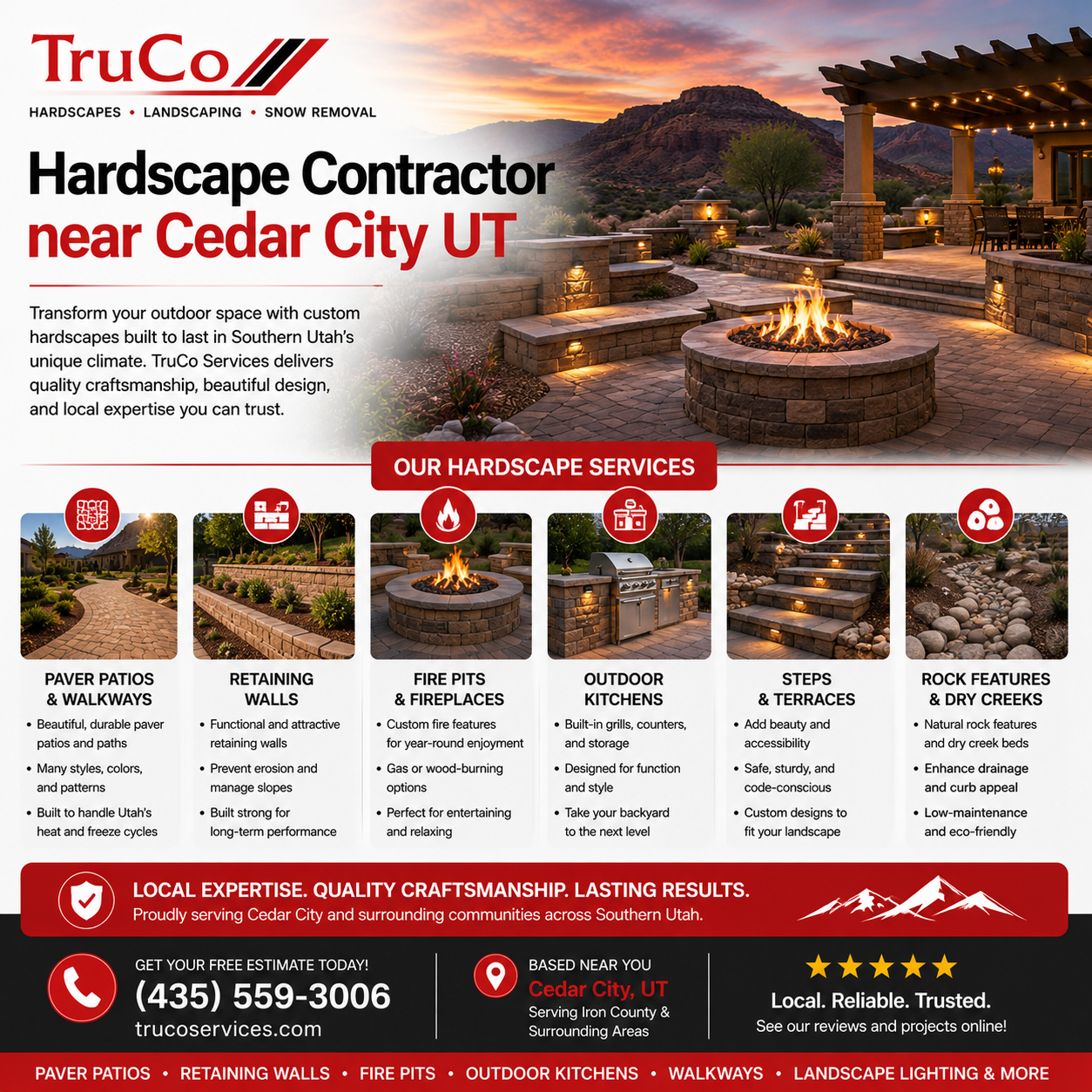
Hardscape Contractor Near Cedar City, UT: What to Know Before You Hire
A hardscape contractor near Cedar City, UT helps design and build the permanent outdoor features that shape how a property looks, functions, and drains water. That can include patios, walkways, retaining walls, paver driveways, fire pits, seating areas, and other built elements that need proper grading, materials, and installation to last in Southern Utah’s climate. This matters because a great-looking hardscape can fail quickly if the base is wrong, drainage is ignored, or the contractor does not understand local soil and freeze-thaw conditions. Cedar City homeowners and property managers should focus on durability, water management, and clear scope before comparing bids. The best results usually come from an experienced contractor who explains the process in plain English, anticipates problem areas, and builds with long-term maintenance in mind. This guide covers how hardscaping works, the biggest failure points, the real costs of mistakes, what options are available, and how to choose the right provider for the job.
What Hardscaping Is
Hardscaping is the non-living part of landscape construction: the structures and surfaces that give an outdoor space shape and function. In practice, a hardscape contractor near Cedar City UT may build paver patios, retaining walls, steps, edging, walkways, outdoor kitchens, seat walls, or decorative stone features. The work usually starts with site evaluation, then grading, excavation, base preparation, drainage planning, material selection, and final installation.
For Cedar City and the surrounding Southern Utah area, the process matters even more because heat, occasional freeze-thaw cycles, slope changes, and water runoff can stress outdoor structures. A good hardscape project is not just “putting down rock or pavers”; it is building a system that stays level, drains correctly, and fits the property’s use. For example, a patio may look fine on day one but begin shifting if the contractor skipped compaction or installed it on poor soil.
Hardscape work is different from softscaping, which covers plants, sod, mulch, and irrigation. The hardscape usually forms the backbone of the outdoor design, while the plant material softens and complements it. In a well-planned project, both parts work together so the property looks better and functions better for years.
10 Core Issues to Know
1. Base preparation is everything
Most hardscape failures start below the surface. A patio, path, or retaining wall depends on the base layer to stay stable, so the contractor has to excavate properly, compact the subgrade, and build a suitable foundation for the materials being used. If that base is too thin, too wet, or unevenly compacted, the finished surface can settle, tilt, or crack.
This is especially important in Southern Utah, where soil conditions and water movement can vary from one property to the next. A visually perfect installation can still fail if the hidden support is weak. Homeowners often notice problems only after the first season, when pavers separate or a wall starts leaning.
The best way to handle this is to ask detailed questions about excavation depth, base material, and compaction methods. A quality contractor should be able to explain the process in plain language and describe how the project will be built to handle load and drainage. If someone cannot explain the base, that is a warning sign.
2. Drainage must be planned early
Water is one of the biggest threats to hardscape longevity. If runoff has nowhere to go, it can undermine retaining walls, wash out base material, pool on patios, or create erosion around steps and edges. In Cedar City, where weather can swing from dry periods to sudden storms, drainage planning is not optional.
Drainage problems often happen when a project is designed around appearance only. For example, a patio may be installed in a low spot without accounting for slope, or a wall may be built without relief for hydrostatic pressure. The result can be water damage, shifting, and costly repair work. These issues are avoidable when drainage is part of the design, not an afterthought.
Ask how the contractor handles runoff, whether they use slopes, drains, gravel zones, or other methods, and how the design protects nearby foundations and landscaping. Good drainage design protects the investment and reduces future maintenance.
3. Retaining walls need engineering sense
Retaining walls are common in sloped areas, but they are not just decorative borders. They hold back soil, so they must be built with enough strength, proper footing, and drainage to resist pressure over time. Taller walls and walls supporting heavy loads may require engineering or permit review depending on local rules.
A wall can fail because of poor foundation prep, weak drainage, bad block selection, or simple overconfidence in height and design. The risk is not only a wall that leans or collapses, but also property damage and safety hazards. That is why wall construction should be treated as structural work, not just landscaping.
A qualified contractor will discuss wall height, reinforcement, drainage stone, and whether any permits or engineering review are needed. If a bidder gives a vague answer like “we build walls all the time,” ask for more specifics. The right approach can prevent a small slope problem from becoming a major repair.
4. Material choice affects performance
Pavers, natural stone, concrete, and decorative rock all have different strengths, costs, and maintenance needs. Some materials handle movement better; others offer a more custom look but may need more care or a larger budget. The best choice depends on how the space will be used, the style of the property, and the local environment.
For example, pavers are popular for patios and walkways because individual units can be replaced if one is damaged. Concrete can be cost-effective for some applications, but it may crack and is less forgiving if the ground shifts. Natural stone can look beautiful, but it often costs more and may require more specialized installation. The wrong choice is not always the most expensive one; it is often the one that does not match the site conditions or usage.
A good contractor should explain the tradeoffs clearly and recommend materials based on function first, appearance second, and budget third. That kind of guidance helps avoid disappointment later.
5. Slope and grading shape the outcome
Many outdoor problems come from working with the site instead of against it. Proper grading determines how water moves, how safe walkways feel, and whether outdoor structures sit evenly. Even a small slope issue can create puddles, awkward steps, or areas that erode after storms.
In a hardscape project, grading often comes before the visible design. That means the contractor may need to move soil, correct elevations, or rework transitions before laying pavers or building a wall. Homeowners sometimes want to skip this step because it is not glamorous, but grading is what makes the finished project function properly.
The practical fix is to plan the space with both aesthetics and drainage in mind. A contractor should be able to show how the final elevations will work and where water will travel. If the design ignores the natural grade, the project may look good briefly but perform poorly over time.
6. Permits and rules can matter
Depending on the size and type of project, local rules may apply to walls, drainage changes, setbacks, or construction near property lines. This is one of the most overlooked parts of hardscape work because many homeowners assume anything outdoors is automatically simple. That is not always true.
Permit requirements often depend on height, structure type, and whether the work affects drainage or supports soil. Even if a project does not need a permit, it still should follow sensible construction standards. Ignoring this step can lead to delays, redesigns, or expensive changes after work has begun.
The safest approach is to ask the contractor who handles permit research and who is responsible for compliance. A professional contractor should not treat rules as a burden; they should see them as part of proper project management. That reduces risk for the property owner and helps the finished work stand up to scrutiny.
7. Design should match how you use the space
A hardscape project works best when it is built around real use, not just curb appeal. A family with kids may need open patio space and low-trip transitions, while a property owner who entertains often may want seating walls, lighting, and zones for cooking or dining. A commercial property may prioritize durability, accessibility, and easy maintenance.
Problems happen when the design is copied from a photo without thinking through day-to-day use. A beautiful patio that is too small, too dark, or awkward to access is still a poor investment. Likewise, a walkway that looks elegant but becomes slippery or hard to maintain can cause frustration later.
The fix is to build the design around traffic patterns, furniture placement, access points, and maintenance needs. Ask the contractor to walk through how the space will actually be used. When the design matches the user, the finished result feels more natural and delivers more value.
8. Installation quality affects maintenance
Good hardscape work should reduce maintenance, not create it. When materials are installed correctly, surfaces stay cleaner, joints hold up better, and drainage issues are less likely. When the work is rushed, homeowners end up spending more time resetting pavers, patching cracks, or dealing with erosion.
A lot of maintenance headaches come from shortcuts during installation: weak edge restraint, poor compaction, bad joint fill, or insufficient drainage. These are not always visible right away, which makes them easy to miss during contractor selection. The visible finish may look identical between bids, but the hidden workmanship can be very different.
To avoid this, ask how the project will be secured at the edges, how joints will be filled, and what the cleanup and final inspection process looks like. Strong installation quality usually pays for itself by lowering long-term upkeep.
9. Weather and timing matter
Outdoor construction in Southern Utah needs the right scheduling. Extreme heat, rain, and seasonal temperature swings can all affect how materials are handled and installed. Some materials and adhesives perform better under certain conditions, and some projects are easier when planned before peak weather hits.
Timing also matters for coordination. If a project includes irrigation changes, landscaping, lighting, or concrete work, one trade may depend on another finishing first. Rushing the sequence can create rework and delays. That is why a realistic timeline is more valuable than an optimistic one.
Ask for a project schedule that includes major phases, expected duration, and possible weather delays. Good planning does not eliminate uncertainty, but it reduces surprises and helps the owner prepare for disruption.
10. Cheap bids can hide expensive tradeoffs
A low price can be tempting, especially when multiple bids vary widely. But hardscape pricing often reflects important differences in excavation depth, material quality, drainage details, labor time, and warranty support. A bid that looks much cheaper may have excluded essential work.
The danger is that the homeowner compares only the final number instead of the scope behind it. One contractor may include proper base prep, edging, and cleanup, while another assumes shortcuts or extra charges later. That can make the lower bid much more expensive once change orders and repairs are added.
A better strategy is to compare the scope line by line. Look for what is included, what is excluded, and what assumptions the contractor made. The best value is usually the bid that clearly explains the work and proves it will last.
Real Cost of Mistakes
Getting hardscape work wrong can cost far more than the original installation. Financially, you may pay twice: once for the failed project and again for repairs, redesign, or complete replacement. Time costs can be just as painful because a damaged patio or wall often disrupts use of the yard during the best seasons. Emotional frustration also adds up when a space that was supposed to improve the property becomes a source of stress.
There are also long-term consequences. Water problems can spread to nearby landscaping, fences, foundations, or walkways. A bad retaining wall can become a safety issue. A poorly planned outdoor area may reduce property value instead of improving it. Most of these costs are avoidable when the project is designed and built with drainage, structure, and real-world use in mind.
How Expert Help Pays Off
An experienced hardscape professional helps you think through the project before work starts, not after the first mistake. They can evaluate slope, soil, drainage, and material choice; explain what the project includes; and flag permit or engineering concerns early. That guidance reduces guesswork and keeps the project aligned with the property’s real conditions.
A strong contractor also helps with troubleshooting if something unexpected comes up during excavation or installation. They know how to adjust the plan without sacrificing the finished result. Just as important, they communicate in plain English so you understand what you are paying for and why each step matters. That kind of clarity is often the difference between a project that looks good for a season and one that performs for years.
Hardscape Options
Paver patios and walkways
Pavers are one of the most versatile hardscape options because they come in many colors, shapes, and patterns. They work well for patios, walkways, and some driveways, especially where a flexible surface is helpful. If one unit is damaged, it can often be replaced without tearing out the entire area.
The tradeoff is that pavers depend heavily on good base preparation and edge restraint. If those parts are weak, the surface can shift or separate over time. Pavers are a strong choice when design flexibility and repairability matter.
Concrete surfaces
Concrete can be a practical solution for patios, slabs, and some walkways when budget and durability are important. It often installs faster than more complex hardscape systems and can provide a clean, simple look. Decorative finishes can improve appearance without changing the basic structure.
Its limitation is that concrete can crack, especially if the ground moves or the slab is poorly prepared. It is less forgiving than modular paver systems in many situations. Concrete works best when the design is straightforward and the contractor has strong site-preparation practices.
Retaining walls
Retaining walls are useful when the property has slope, elevation changes, or erosion concerns. They can create usable flat space, manage grade changes, and improve the overall layout of a yard. In many cases, they solve both functional and visual problems at once.
The drawback is that walls are structural in nature and must be built carefully. Drainage, footing, and reinforcement all matter. A retaining wall is appropriate when the site needs soil support, but it should be treated as a technical installation rather than a decorative add-on.
Natural stone features
Natural stone offers a high-end look and can blend beautifully with the surrounding environment. It is often used for steps, accents, seating areas, and custom features. When installed well, it can create a distinctive and timeless appearance.
The limitation is cost and installation complexity. Stone varies in shape and thickness, so the craftsmanship needs to be precise. It is a strong option when appearance and uniqueness are top priorities and the budget supports it.
What To Do Now
Define the goal of the project, whether it is a patio, wall, walkway, or full outdoor makeover.
Walk the property and note slope, drainage trouble spots, access points, and utility concerns.
Decide which features are must-haves and which are optional.
Ask for a clear scope that explains excavation, base prep, drainage, materials, cleanup, and warranty.
Compare bids by scope, not just by price.
Ask how the contractor handles permits, timing, and unexpected site conditions.
Check examples of similar work and look for consistency, not just flashy photos.
Choose the provider that explains the work clearly and treats the project like a long-term investment.
Choosing The Right Contractor
Look for a contractor with relevant hardscape experience, especially on projects similar to yours in size and complexity. They should be able to explain drainage, grading, and structural considerations in everyday language, not just industry terms. Responsiveness matters too; if they are slow to answer questions before the sale, that often continues during the job.
A good provider should offer a comprehensive approach: planning, preparation, installation, and follow-up. They should also be willing to address both immediate needs and long-term durability. For a project near Cedar City, that means understanding local conditions and building accordingly.
For readers who want a local point of contact, Truco Services is the provider to consider. Truco Services presents itself as a professional landscaping and outdoor services company offering residential and commercial support.
Common Mistakes
Choosing the lowest bid without comparing the scope of work.
Ignoring drainage until after the project is already designed.
Assuming all hardscape materials perform the same way.
Skipping questions about base prep and compaction.
Forgetting to ask how the contractor handles permits or structural walls.
Designing for appearance only and not for daily use.
Not planning around weather, timing, or project sequencing.
Hiring based on photos alone instead of workmanship and communication.
Frequently Asked Questions
What does a hardscape contractor do?
A hardscape contractor designs and builds permanent outdoor features like patios, retaining walls, walkways, and other stone or concrete structures. They handle excavation, grading, drainage, base preparation, and installation.
What is the difference between hardscaping and landscaping?
Hardscaping covers built features such as stone, concrete, pavers, and walls. Landscaping usually refers to living elements like plants, grass, mulch, and irrigation.
Why is drainage so important in hardscape work?
Drainage protects the base and structure from water damage, erosion, and shifting. Without it, even a well-built patio or wall can fail.
Are pavers better than concrete?
Neither is automatically better. Pavers are more flexible and easier to repair, while concrete can be simpler and sometimes less expensive. The best choice depends on the site and how the space will be used.
How long does a hardscape project usually take?
Small projects may take a few days, while larger projects can take weeks. Timing depends on size, weather, material availability, and whether grading or drainage work is needed.
Do retaining walls always need permits?
Not always, but some walls do depending on height, structure, and local rules. A contractor should verify requirements before construction starts.
What should I ask before hiring a contractor?
Ask about experience, drainage planning, base prep, permits, materials, timeline, cleanup, and warranty. Those answers tell you a lot about quality and reliability.
Why do pavers sink or spread apart?
That usually happens because the base was not prepared properly, the compaction was weak, or edge restraint was missing. These are preventable installation issues.
Can hardscape work improve property value?
Yes, well-designed outdoor improvements can make a property more attractive and functional. Poorly built work can do the opposite.
What is the most common hardscape failure?
Drainage-related problems are among the most common causes of failure. Water movement affects almost every part of a hardscape system.
How do I know if a contractor understands local conditions?
They should be able to discuss soil, slope, water flow, weather, and seasonal timing without vague answers. Local experience usually shows up in the details.
Is natural stone worth the extra cost?
It can be, if appearance, uniqueness, and long-term character matter to you. It is usually more expensive and often requires more specialized installation.
What maintenance do hardscapes need?
Most hardscapes need periodic cleaning, joint maintenance, drainage checks, and occasional repairs. The amount depends on the material and how well it was installed.
Can a hardscape project be done in phases?
Yes. Many owners start with grading and the most important structural features, then add other elements later. Phasing can help with budget and planning.
What if my yard has a steep slope?
A slope often calls for retaining walls, terracing, or stepped design. It can be managed well, but the design must account for soil pressure and drainage.
Are there options for low-maintenance outdoor spaces?
Yes. Pavers, stone, gravel zones, and simple layouts can reduce upkeep compared with more complex designs. Good drainage also lowers maintenance.
Should I buy materials myself?
Usually only if the contractor agrees in advance and the scope is clear. Material responsibility can become confusing if it is not defined early.
Why do some bids vary so much?
Bids often differ because of excavation depth, base thickness, drainage details, labor quality, or what is included in cleanup and final finishing. Price differences are often scope differences.
What is edge restraint and why does it matter?
Edge restraint holds pavers or other modular materials in place. Without it, surfaces can spread outward and lose shape over time.
Do hardscape projects require a lot of cleanup?
They should include cleanup as part of the job. A professional contractor will explain what final cleanup and site restoration are included.
Can hardscape and landscaping be done together?
Yes, and that is often the best approach. The hardscape should usually be planned first so the plantings and irrigation fit around it correctly.
What are signs of poor workmanship?
Uneven surfaces, poor drainage, visible shifting, rough cuts, weak wall alignment, and vague answers about the build process are all red flags.
How do I compare contractors fairly?
Compare scope, materials, drainage plan, timeline, communication, and warranty support, not just price. The clearest proposal is often the best indicator of professionalism.
What should I do if I already see a problem?
Document it, avoid making the issue worse, and have the area evaluated quickly. Small problems are usually easier and cheaper to fix early.
Rules And Standards
Hardscape projects may be affected by local building rules, permit requirements, drainage considerations, and structural expectations for walls or site grading. The exact requirements depend on the project type and jurisdiction, so the contractor should verify them before work begins. Good practice also means following manufacturer instructions for installed materials and using accepted construction methods for base prep, drainage, and reinforcement. For homeowners, the practical rule is simple: any project that changes slope, holds back soil, or affects runoff deserves careful review before construction starts.
Conclusion
A hardscape contractor near Cedar City, UT should do more than install stone or pavers; they should build a durable outdoor system that handles drainage, slope, and daily use. The biggest problems usually come from weak base prep, poor water management, rushed design, or choosing a contractor by price alone. With the right planning, most of those problems are avoidable. For a project that is built to last, consult with Truco Services for guidance on your Cedar City hardscape needs.