
How to Identify Early Signs of Tree Stress in Utah

Why Early Detection of Tree Stress Matters in Utah
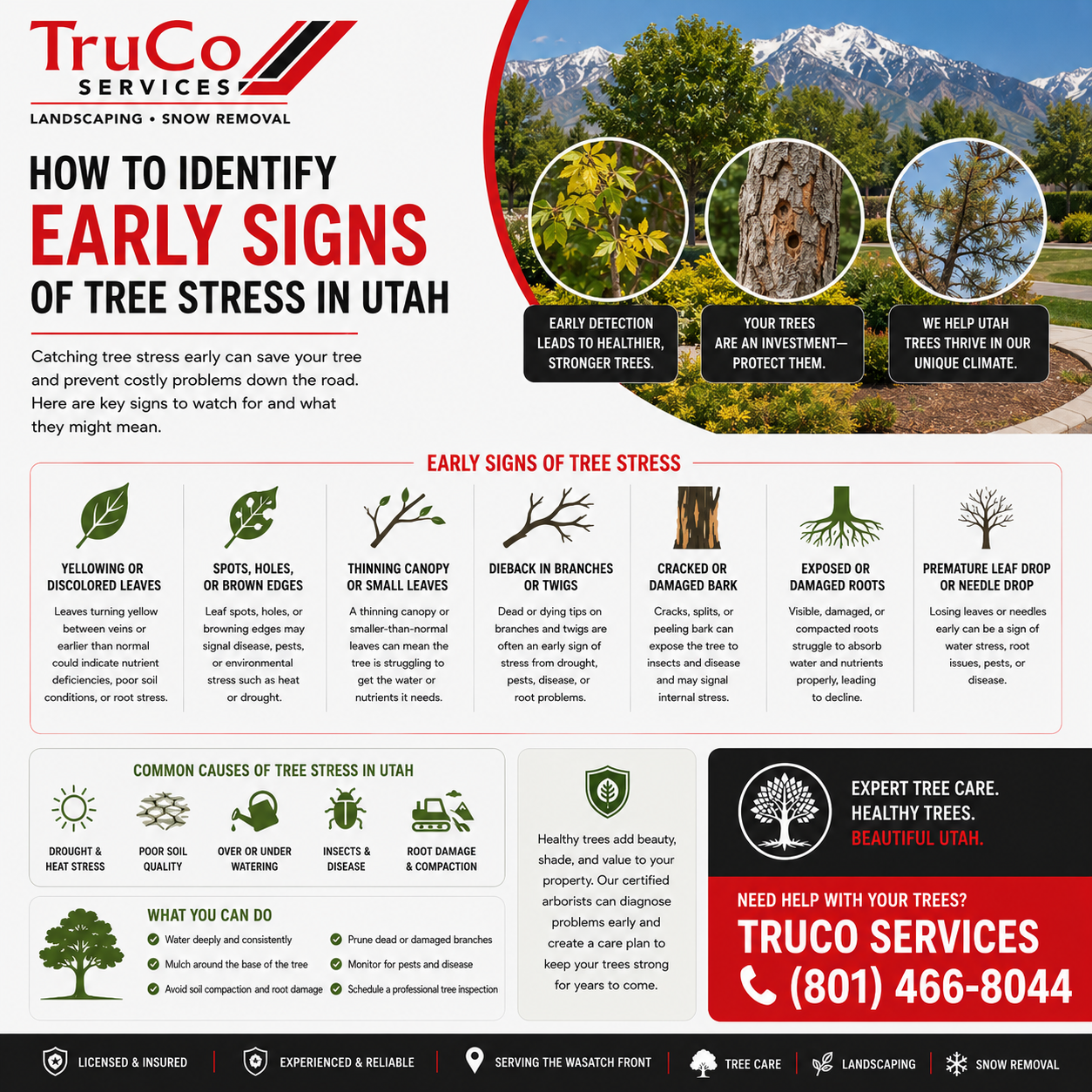
Catching tree stress early is the single most important factor in saving a struggling tree. In Utah's challenging climate — with its alkaline clay soil, intense sun, temperature extremes, and periodic drought — trees face multiple stressors that can compound over time. A tree that shows subtle signs of stress this season may decline rapidly next year if the underlying issue isn't addressed. Early intervention is almost always less expensive and more successful than treating a tree that has already declined significantly. A certified arborist can often correct problems like soil compaction, nutrient deficiencies, or pest infestations if caught early. Waiting until the tree shows severe symptoms may mean removal is the only option, costing $300-1,500+ in Utah. This guide teaches you how to recognize the early warning signs of tree stress so you can take action before it's too late.
Leaf and Foliage Symptoms
Leaves are the first indicators of tree health. Changes in leaf color, size, or timing can reveal underlying stress. Chlorosis (yellowing leaves) — in Utah, the most common cause is iron deficiency due to alkaline soil (pH 7.5-8.5). Yellow leaves with green veins indicate iron chlorosis, common in silver maple, red maple, and pin oak. Early treatment with iron chelates or soil acidification can reverse this condition. Leaf scorch (browning at the edges) — typically indicates water stress, either from drought, root damage, or soil compaction. In Utah, summer leaf scorch is common during July-September heat waves. It can also indicate salt damage from road de-icing products. Early intervention with deep watering and mulch can prevent further damage. Small or sparse leaves — trees that produce smaller-than-normal leaves or fewer leaves than usual are signaling stress. This can result from root damage, nutrient deficiency, or the early stages of disease. Compare leaf size to previous years or to healthy trees of the same species. Early leaf drop — trees that drop leaves in late summer or early fall (before September) are stressed. While some early leaf drop is normal in drought years, consistent early drop indicates a problem. Premature fall color — leaves that turn color and drop weeks before neighboring trees of the same species are showing stress symptoms. This is often a response to root stress. Wilting leaves — leaves that droop or curl during the day, even when soil moisture seems adequate, may indicate root issues or vascular disease. In Utah, Dutch elm disease and Verticillium wilt both cause wilting symptoms. Dead branches in the canopy — scattered dead branches throughout the tree, especially in the upper canopy, indicate chronic stress. A healthy tree may have some interior branch dieback from shade, but widespread dieback is a concern.
Trunk and Bark Symptoms
The trunk and bark provide important clues about tree health. Cracks in the bark — vertical cracks can result from temperature fluctuations (frost cracks), rapid growth, or underlying decay. In Utah, frost cracks are common on the south and west sides of tree trunks due to winter sun scald. Deep cracks that extend into the wood require professional evaluation. Bark splitting or peeling — bark that splits or peels away from the trunk, especially in patterns not normal for the species, indicates stress. Some trees (like river birch and certain maples) naturally have peeling bark, so know what's normal for your species. Bark cankers — sunken, discolored, or oozing areas on the bark indicate disease. Cytospora canker is common in Utah on spruce, poplar, and fruit trees. Early pruning of infected branches can limit spread. Missing bark — patches of bark that have fallen off expose the underlying wood. This can result from mechanical injury, animal damage, or disease. Exposed wood is vulnerable to decay and insect infestation. Sap or resin flow — small amounts of sap on bark can be normal, but excessive flow, especially with discoloration or foaming, indicates stress or disease. In Utah, bacterial wetwood (slime flux) is common in elm, poplar, and maple. Fungal growth — mushrooms or conks (bracket fungi) growing on the trunk or at the base of the tree indicate advanced internal decay. This is a serious sign requiring immediate professional evaluation for tree safety. In Utah, artist's conk and honey mushroom are common decay fungi.
Branch and Crown Symptoms
The tree's overall structure reveals its health status. Crown thinning — a gradual loss of density in the tree's crown (upper canopy) over multiple years indicates chronic stress. Compare your tree's crown density to photos from previous years. Crown dieback — death of branches starting at the tips and progressing inward toward the trunk. This is a serious sign of decline. In Utah, drought stress often causes crown dieback in species like aspen and birch. Epicormic sprouts — clusters of small branches growing from the trunk or main branches (also called water sprouts or suckers). These are stress responses indicating the tree is trying to compensate for canopy loss. Excessive sprouting after pruning is normal, but spontaneous sprouting indicates stress. Leaning trunk — a tree that develops a new lean (not one that has always been there) may have root damage or soil failure. In Utah, soil saturation from heavy rains or snowmelt can cause leaning in trees with compromised root systems. Forked or multiple leaders — trees that develop competing leaders (main trunks) are structurally weaker and more prone to splitting in wind and snow. While some species naturally have multiple leaders, a tree that suddenly develops new leaders may be responding to stress.
Root and Soil Symptoms
Root problems are often hidden but reveal themselves through above-ground symptoms. Exposed or damaged roots — roots that are cut, scraped, or exposed above the soil surface are vulnerable to decay and disease. In Utah, lawn mower and string trimmer damage to surface roots is extremely common. Soil heaving or cracking around the base — soil that is pulling away from the trunk or cracking in a circle around the tree indicates root movement or soil instability. This can mean the tree is at risk of falling. Soil compaction — hard, crusted soil that resists penetration, or soil that puddles after rain, indicates compaction that restricts root growth and oxygen exchange. Utah's clay soil is naturally prone to compaction, which is worsened by foot traffic, vehicles, and construction. Mulch volcanoes — excessive mulch piled against the trunk causes bark decay, girdling roots, and stress. In Utah, mulch volcanoes are a common landscaping mistake that slowly kills trees over several years. Fungal growth at the base — mushrooms growing at the base of the tree or on exposed roots indicate root rot. In Utah, Armillaria root rot is a common problem, especially in oaks and fruit trees.
Pest and Disease Indicators
Certain stress symptoms point to specific pests or diseases common in Utah. Aphids — sticky honeydew on leaves and ground beneath the tree, with sooty mold growing on the honeydew. Aphids are attracted to stressed trees. While usually not fatal, heavy infestations indicate underlying stress. Scale insects — small, immobile bumps on branches and leaves that may be brown, white, or cottony. Scale infestations often develop on trees already stressed by drought or poor growing conditions. Borers — small holes in the bark, sawdust-like frass, or oozing sap. Borers typically attack trees that are already stressed. In Utah, bronze birch borer and lilac/ash borer are common. Spider mites — fine webbing on leaves, combined with stippled or bronzed foliage. Mite outbreaks are common in Utah's hot, dry summers and often indicate drought stress. Powdery mildew — white, powdery coating on leaves. Common in Utah on lilac, oak, and fruit trees. While usually cosmetic, severe infections can stress trees. Fungal leaf spots — circular spots or blotches on leaves that may be brown, black, or yellow. Most leaf spot diseases are cosmetic, but severe infections can cause early leaf drop and stress.
When to Call a Professional
Some stress symptoms require professional diagnosis and treatment. Call a certified arborist if you notice: sudden or severe dieback in the canopy (more than 25% of the crown), cracks or splits in the trunk or major branches, fungal conks (mushrooms) growing on the trunk, a newly developed lean, especially with soil cracks or heaving, multiple large dead branches in the canopy, signs of pest infestation that don't respond to basic treatment, or you're simply unsure what's wrong with your tree. In Utah, certified arborists can be found through the International Society of Arboriculture (ISA) website or by searching for local tree care companies. An arborist consultation typically costs $100-300 and includes a health assessment, diagnosis, and treatment recommendations. Early diagnosis saves money and trees — don't wait until it's too late.
Frequently Asked Questions
What is the most common sign of tree stress in Utah? Leaf chlorosis (yellowing) is the most common sign, typically caused by iron deficiency in Utah's alkaline soil. Yellow leaves with green veins are the classic symptom. This is treatable with iron chelates and soil amendments.
Can a stressed tree recover? Yes, if the stress is caught early and the underlying cause is addressed. Trees are resilient and can recover from many types of stress with proper care — deep watering, mulching, soil amendments, and pest control. Severe or prolonged stress may cause permanent damage.
How often should I inspect my trees for stress? Inspect your trees at least three times per year: early spring (as leaves emerge), mid-summer (during peak growing season), and early fall (before dormancy). After storms or drought periods, inspect for damage. Regular inspection helps catch problems early.
Is tree stress the same as tree disease? No. Stress is the tree's response to adverse conditions (drought, poor soil, root damage). Disease is a specific pathological condition caused by pathogens. However, stress makes trees more vulnerable to disease. A stressed tree is like a person with a weakened immune system — more susceptible to infection.
Can pruning help a stressed tree? Yes, but carefully. Remove only dead, diseased, or damaged branches. Avoid heavy pruning of stressed trees, as it removes foliage the tree needs for photosynthesis. Focus on supporting the tree's recovery through improved watering, mulching, and soil care before doing major pruning.