
Best Drought-Tolerant Trees for Utah Landscapes

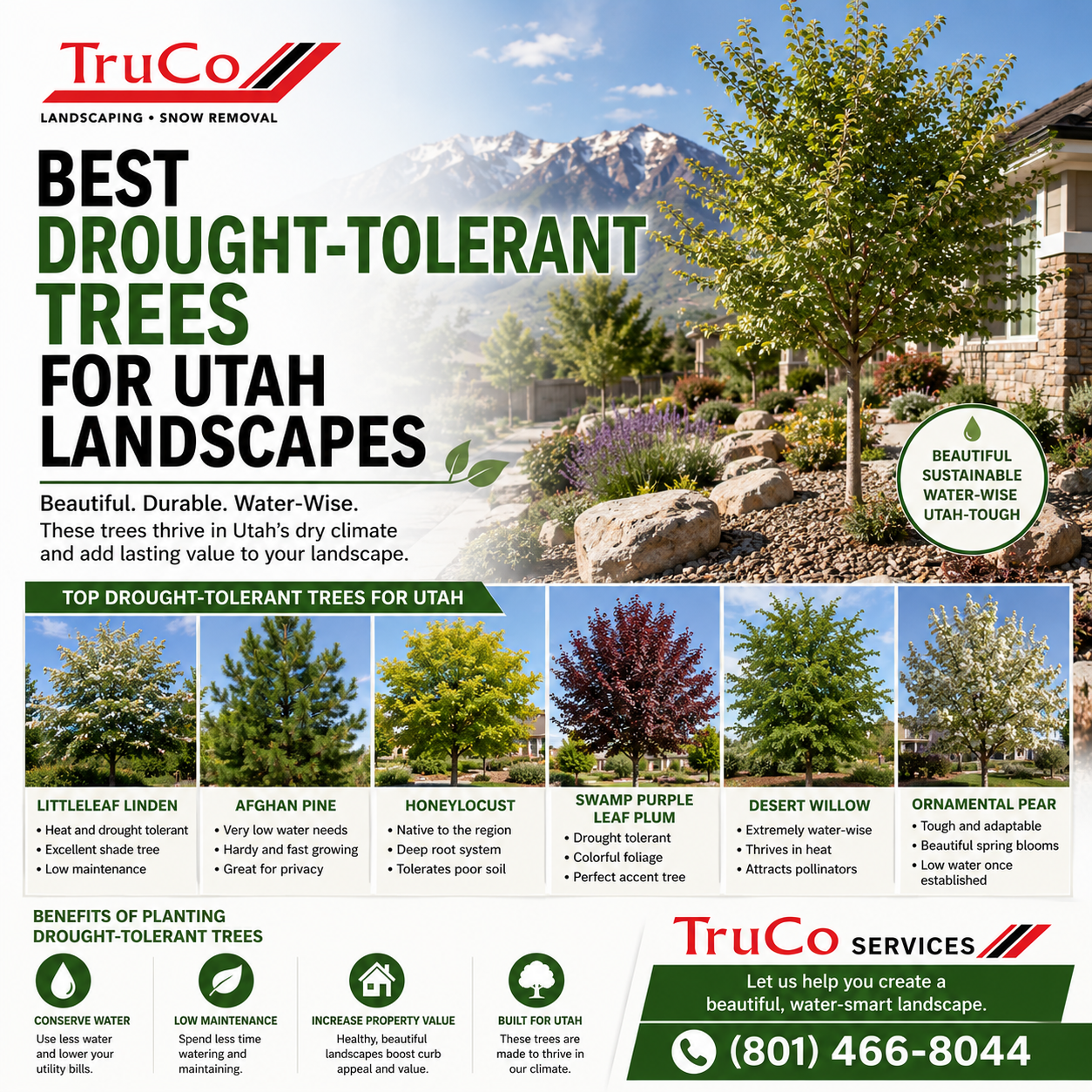
Why Drought-Tolerant Trees Matter in Utah
Utah is one of the driest states in the nation, with annual precipitation averaging 12-20 inches along the Wasatch Front and even less in southern and western areas. As Utah's population grows and water resources become increasingly strained, choosing drought-tolerant trees is both practical and responsible. Drought-tolerant trees — species that can survive on natural rainfall once established — offer numerous benefits: they need 50-70% less water than traditional landscape trees, reducing water bills and conservation efforts; they are more resilient during drought years and under watering restrictions; they develop deeper root systems that make them more wind-firm and stable; they require less maintenance and are generally more pest-resistant; and they provide the same shade, beauty, and property value benefits as more water-dependent species. This guide covers the best drought-tolerant trees for Utah landscapes, organized by size and use, with specific recommendations for different areas of the state. Whether you are landscaping a new home in St. George, replacing a water-hungry tree in Salt Lake City, or planting windbreaks in Tooele County, drought-tolerant trees are a smart investment for Utah's water-conscious future.
Large Drought-Tolerant Shade Trees (Over 35 Feet)
Several large trees provide excellent shade while thriving on minimal water in Utah. Honeylocust (Gleditsia triacanthos inermis) is one of Utah's most drought-tolerant large trees. Once established, it thrives on natural rainfall in most years. Thornless, seedless varieties like 'Skyline' and 'Shademaster' are ideal. Tolerates alkaline soil, clay, and urban conditions. Grows 35-50 feet with dappled shade. Kentucky coffeetree (Gymnocladus dioicus) is extremely drought-tolerant once established, with deep roots that access groundwater. Tolerates alkaline soil, clay, and urban conditions. Grows 40-60 feet with bold texture and late-emerging leaves. Male cultivars like 'Espresso' are seedless and less messy. Bur oak (Quercus macrocarpa) is Utah's most drought-tolerant oak. Deep taproot makes it very drought-resistant once established. Tolerates clay, alkaline soil, and urban conditions. Slower growing but extremely long-lived (200-300 years). Grows 50-70 feet. Chinese elm (Ulmus parvifolia) tolerates drought, heat, and alkaline conditions well. Disease-resistant and adaptable. Grows 35-45 feet with graceful form and attractive bark. Pinyon pine (Pinus edulis) is a Utah native that is extremely drought-tolerant once established. Slower growing but very long-lived. Grows 15-30 feet with dense, rounded form. Produces edible pine nuts. Pinyon is ideal for dry, rocky sites and naturalistic landscapes. All these trees need regular watering for the first 2-3 years to establish deep root systems. After establishment, they can thrive with minimal supplemental water except during severe drought.
Medium Drought-Tolerant Trees (15-35 Feet)
Medium-sized drought-tolerant trees fit well in smaller landscapes. Gambel oak (Quercus gambelii) is a Utah native that is extremely drought-tolerant. Grows 15-30 feet as a large shrub or small tree. Brilliant orange-red fall color. Excellent wildlife value. Can form thickets — ideal for naturalistic plantings. Goldenrain tree (Koelreuteria paniculata) tolerates heat, drought, and alkaline soil exceptionally well. Grows 25-35 feet with summer yellow flowers and papery seed pods. Adaptable to various soil conditions. Good for urban landscapes. Amur maple (Acer tataricum subsp. ginnala) is very drought-tolerant once established. Grows 15-20 feet with brilliant red fall color. Tolerates clay, alkaline soil, and cold. Excellent small tree for dry sites. Western serviceberry (Amelanchier alnifolia) is a Utah native that tolerates drought well once established. Grows 15-25 feet. White spring flowers, edible berries, yellow-orange fall color. Multi-season interest. Curlleaf mountain mahogany (Cercocarpus ledifolius) is extremely drought-tolerant — one of Utah's most water-wise native trees. Grows 10-20 feet. Distinctive twisted form, persistent feathery seed plumes. Excellent for dry, rocky, and exposed sites. New Mexico olive (Forestiera pubescens) tolerates drought and alkaline soil. Grows 10-15 feet as a large shrub or small tree. Inconspicuous flowers but attractive form. Good for naturalistic landscapes and wildlife habitat. Rocky Mountain juniper (Juniperus scopulorum) is highly drought-tolerant once established. Grows 15-30 feet depending on form. Provides year-round green structure. Excellent for windbreaks, screens, and dry sites.
Drought-Tolerant Evergreens for Utah
Evergreens present a special challenge in drought conditions — they lose moisture through their needles year-round. However, several evergreens are well-adapted to Utah's dry climate. Pinyon pine (Pinus edulis) is Utah's most drought-tolerant pine. Grows slowly to 15-30 feet. Dense, rounded form. Extremely drought-tolerant once established. Excellent for dry, rocky sites. Rocky Mountain juniper (Juniperus scopulorum) is extremely drought-tolerant — a Utah native that thrives in dry conditions. Various forms available from low-growing shrubs to 30-foot trees. Excellent for screens, windbreaks, and specimens. Utah juniper (Juniperus osteosperma) is even more drought-tolerant than Rocky Mountain juniper. Grows 10-20 feet with a distinctive gray-green color. Native to Utah's driest areas. Excellent for low-water landscapes and naturalistic plantings. Ponderosa pine (Pinus ponderosa) tolerates drought once established. Grows 50-70 feet with distinctive orange bark. Native to Utah's mountains and foothills. Needs well-drained soil. Singleleaf pinyon (Pinus monophylla) is similar to pinyon pine but with single needles. Extremely drought-tolerant. Grows 15-30 feet. Native to western Utah and the Great Basin. Excellent for dry, exposed sites. For all drought-tolerant evergreens, deep watering during establishment is critical — drought tolerance develops only after the root system is well-established (2-3 years after planting). Even established evergreens benefit from occasional deep watering during severe drought, especially in fall before winter.
How to Establish Drought-Tolerant Trees in Utah
The key to drought-tolerant trees is proper establishment — even the most drought-tolerant species need regular water for the first 2-3 years. Water deeply and consistently — water newly planted trees every 5-7 days during the first growing season. In following years, gradually reduce frequency to encourage deep root growth. By year three, most drought-tolerant trees can survive with minimal supplemental water. Plant at the right time — fall planting (September-October) gives trees a head start — roots establish during cool weather and are ready for spring growth. Spring planting (March-April) is the second-best option. Mulch heavily — apply 3-4 inches of organic mulch over the root zone. Mulch conserves soil moisture, moderates soil temperature, and reduces competition from weeds. Keep mulch away from the trunk. Use deep, infrequent watering rather than shallow, frequent watering to encourage deep roots. In Utah's clay soil, water slowly to ensure penetration. Choose the right location — plant trees where they can develop large root systems. Avoid compacted soil, narrow planting strips, and areas where roots will be confined. Use native soil (do not over-amend the backfill) so roots are encouraged to spread into the surrounding soil. Drought-tolerant trees that are pampered with frequent water will develop shallow roots and may not survive when water is reduced. The goal is to encourage deep, wide-spreading root systems that can access moisture deep in the soil profile.
Designing with Drought-Tolerant Trees
Drought-tolerant trees offer design flexibility for Utah landscapes. Group plants by water needs — place drought-tolerant trees together in hydrozones separate from higher-water-use plants (lawn, flowers). This allows efficient irrigation and avoids overwatering trees that prefer drier conditions. Use drought-tolerant trees as the backbone of low-water landscapes — they provide structure, shade, and year-round interest with minimal water. Combine with drought-tolerant shrubs, perennials, and grasses for a cohesive waterwise design. Incorporate native Utah trees for authentic, regionally appropriate landscapes. Native drought-tolerant trees like Gambel oak, pinyon pine, and serviceberry create a naturalistic look that fits Utah's landscape character. Consider the mature size — drought-tolerant trees often grow more slowly than water-loving trees but reach impressive size over time. Plan for their ultimate dimensions. Use drought-tolerant evergreens for year-round structure and winter interest in low-water landscapes. Rocky Mountain juniper and pinyon pine provide green color and form when deciduous trees are bare. Create shaded microclimates — drought-tolerant trees that provide shade create cooler, moister conditions under their canopy, allowing more water-sensitive plants to thrive in the understory. In Utah's sunny climate, the shade from a single well-placed tree can reduce water needs for everything beneath it by 30-50%. Use drought-tolerant trees along south and west exposures to shade buildings and reduce cooling costs — this is the most energy-efficient placement.
Watering Strategies for Established Drought-Tolerant Trees
Even drought-tolerant trees need occasional water during Utah's extreme conditions. During normal years — after the 2-3 year establishment period, most drought-tolerant trees need no supplemental water beyond natural rainfall in most Utah locations. During drought years — water established trees deeply once a month during severe drought (when rainfall is less than 50% of normal). Focus on the critical root zone (from trunk to drip line). During extended heat waves — water deep-rooted trees every 2-4 weeks during prolonged periods over 95°F, especially if rainfall has been scarce. During fall — water all trees deeply in October-November before the ground freezes. This is critical for drought-tolerant trees to survive winter. During winter — water drought-tolerant evergreens monthly on warm days (above 40°F) when the ground is not frozen. Signs your drought-tolerant tree needs water — wilting or drooping leaves (especially during the cool morning hours); leaf scorch (brown, crispy edges on leaves); premature fall color or leaf drop; and smaller than normal leaves. However, some drought-tolerant trees naturally have smaller leaves or a more open canopy as a water conservation strategy — know what is normal for your species. Overwatering is as dangerous as underwatering for drought-tolerant trees. In Utah's clay soil, overwatering can cause root rot. Let the soil dry between waterings. Most drought-tolerant trees prefer dry conditions and will suffer in constantly moist soil.
Drought-Tolerant Trees for Different Utah Regions
Utah's diverse climate requires different drought-tolerant tree recommendations for different areas. Wasatch Front (Salt Lake City, Ogden, Provo) — honeylocust, Kentucky coffeetree, bur oak, goldenrain tree, Amur maple, serviceberry, Rocky Mountain juniper. These trees thrive in the Wasatch Front's clay soil and moderate precipitation (15-20 inches annually). Mountain communities (Park City, Heber Valley, Sundance) — Gambel oak, curlleaf mountain mahogany, pinyon pine, ponderosa pine, serviceberry. These species tolerate colder temperatures, higher elevations, and thinner soils. Southern Utah (St. George, Cedar City, Washington County) — singleleaf ash, desert willow, pinyon pine, Utah juniper, four-wing saltbush. These species tolerate extreme heat, very low rainfall (8-12 inches annually), and alkaline soil. Western Utah (Tooele, Delta, Great Basin) — Utah juniper, singleleaf pinyon, four-wing saltbush, skunkbush sumac. These species are adapted to the extreme drought, alkaline soil, and high winds of western Utah. For each region, the best approach is to choose locally adapted species — preferably from seed sources in your specific area. Trees from local sources are already adapted to your specific rainfall patterns, temperature extremes, and soil conditions. The Utah Division of Forestry and local conservation districts can provide guidance on the most appropriate species for your specific location and conditions.
Frequently Asked Questions
Do drought-tolerant trees grow more slowly? Some do, but not all. Honeylocust and Kentucky coffeetree have moderate growth rates (1-2 feet per year). Gambel oak and pinyon pine are slower growers (6-12 inches per year). The trade-off for slower growth is greater longevity and lower water needs.
Can drought-tolerant trees survive on rainwater alone in Utah? Once established (after 2-3 years), many drought-tolerant trees can survive on natural rainfall in most years. However, during severe drought years, supplemental watering will keep them healthy. Even the most drought-tolerant trees benefit from occasional deep watering.
Will drought-tolerant trees still need watering during Utah water restrictions? Most Utah municipalities allow hand watering or drip irrigation of trees even during watering restrictions, recognizing trees as essential landscape infrastructure. Check with your local water provider. Drought-tolerant trees are less affected by missed waterings than high-water-use species.
What is the most drought-tolerant shade tree for Utah? Honeylocust and Kentucky coffeetree are tied for the most drought-tolerant large shade trees. Both have deep root systems that access groundwater and are well-adapted to Utah's alkaline soil and dry climate. Bur oak is also excellent but slower growing.
How do I know when my drought-tolerant tree needs water? Check soil moisture 6-8 inches deep — if dry, water deeply. Look for leaf symptoms — wilting, curling, or scorch indicate water stress. However, some drought-tolerant trees naturally have leaves that curl or droop during the heat of the day and recover overnight — this is normal, not a sign of water stress.
Can I plant drought-tolerant trees in a lawn? Yes, but be careful. Lawn irrigation (frequent, shallow watering) conflicts with the deep, infrequent watering that encourages drought-tolerant tree roots to grow deep. Consider separating tree and lawn irrigation zones, or reduce lawn irrigation and increase duration to provide deeper watering for both.