
Cottonwood Heights Exterior Chistmas Light Installers

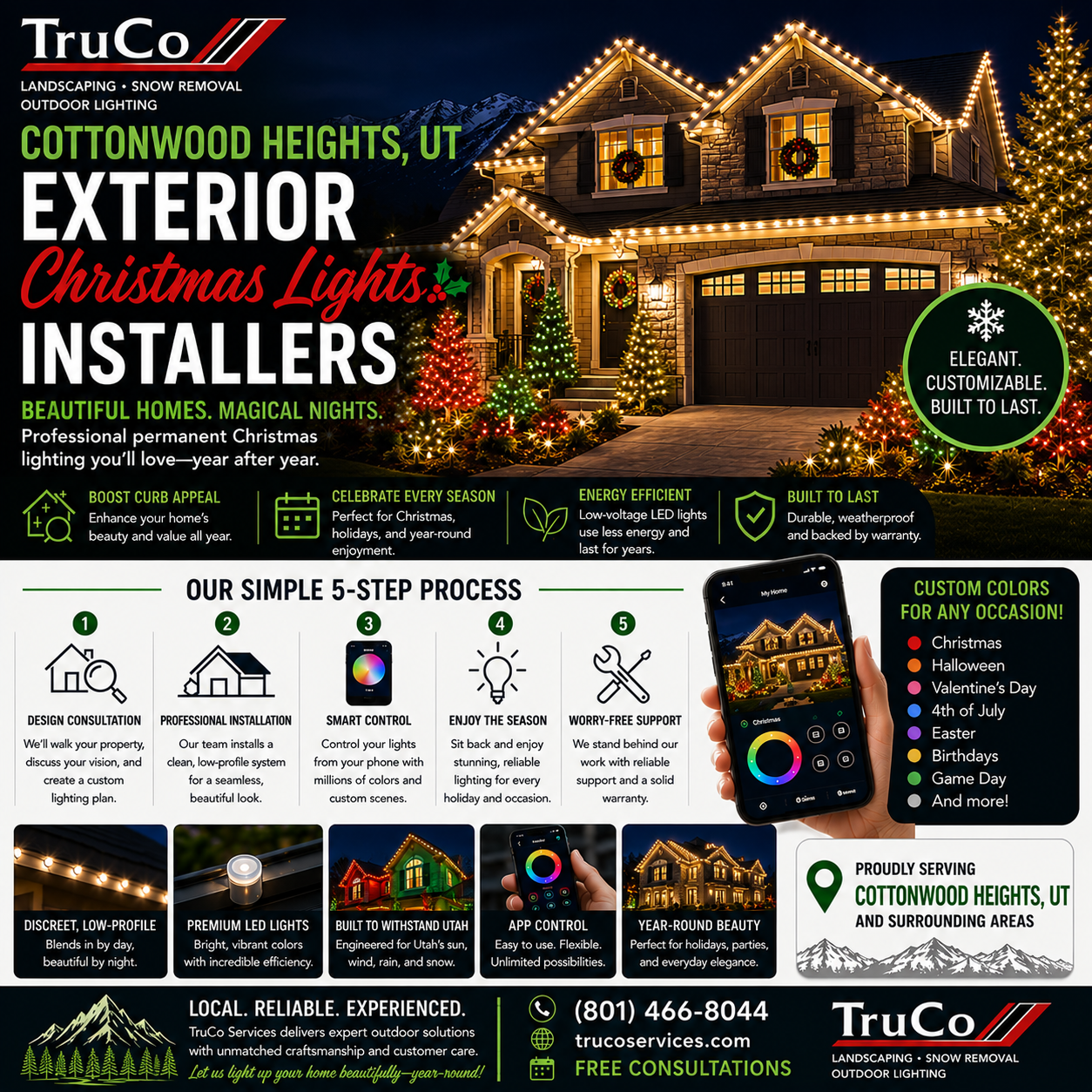
Cottonwood Heights exterior Christmas light installers are professional contractors who design, install, maintain, and remove holiday lighting displays for homes and businesses in Cottonwood Heights, Utah, and the surrounding Salt Lake County area. The most important thing to know up front is that professional installation eliminates the safety risks, time burden, and frustration that come with DIY holiday lighting—while delivering a polished, reliable display that stays lit all season long. This guide explains how exterior Christmas light installation works, the most common pitfalls and how to avoid them, realistic costs in the Cottonwood Heights market, safety and electrical code considerations, and how to choose the right installer for your property. Whether you're planning your first professional display or upgrading from traditional string lights to permanent LED systems, expert guidance helps you achieve better outcomes with less stress.
What Is Cottonwood Heights Exterior Christmas Light Installation and How Does It Work?
Exterior Christmas light installation in Cottonwood Heights is a turnkey service where trained professionals handle every aspect of your holiday lighting—from initial design consultation through installation, ongoing maintenance, and post-holiday takedown and storage. This service has become increasingly popular among busy homeowners and property managers who want a beautiful display without the physical risks and time commitment of climbing ladders, testing bulbs, and wrestling with tangled strands.
Key Components of Professional Holiday Lighting Services
Professional installers typically provide the following services as part of a complete package:
Custom design consultation: A site visit or virtual meeting to assess your property's architecture, rooflines, trees, and landscaping, then create a lighting plan that complements your home's style.
Premium commercial-grade lights: High-quality LED strings that are brighter, more energy-efficient, and more durable than typical retail lights.
Secure mounting hardware: Specialized clips and fasteners that attach lights to gutters, shingles, trim, and trees without damaging your property.
Professional installation: Trained crews using proper ladder safety, fall protection, and electrical safety protocols to hang lights efficiently and safely.
Seasonal maintenance: If a bulb burns out or a strand fails, the installer returns to repair or replace it at no additional charge.
Takedown and storage: After the holidays, the crew removes all lights, carefully coils and boxes them, and stores them in a climate-controlled facility until next season.
Governing Safety Standards and Best Practices
Professional installers follow established safety guidelines from organizations like the Electrical Safety Foundation International (ESFI) and Occupational Safety and Health Administration (OSHA). Key standards include:
Using only outdoor-rated lights and extension cords with proper weatherproof ratings.
Plugging all outdoor circuits into Ground Fault Circuit Interrupter (GFCI) outlets to prevent electrical shock.
Using fiberglass or wooden ladders (never aluminum) when working near electrical wiring.
Maintaining proper ladder positioning (the 4-to-1 rule) and three points of contact while climbing.
Keeping all equipment at least 10 feet away from overhead power lines.
The National Electrical Code mandates GFCI protection on every outdoor receptacle, and it's against code to bypass this safety feature.
Common Variations and Approaches
Cottonwood Heights homeowners typically choose between two main approaches:
Traditional seasonal installation: Lights are hung in late October or November, enjoyed through the holidays, then removed in January. This is the most common option and works well for homeowners who want classic white or multicolor string lights on rooflines, windows, trees, and walkways.
Permanent LED lighting systems: Year-round LED tracks mounted to your home's eaves or fascia, controlled via smartphone app to display different colors and effects for Christmas, Halloween, Fourth of July, or everyday accent lighting. These systems cost more upfront but eliminate annual installation fees and provide flexibility for multiple holidays and events. Average permanent install costs in the area range from $3,500 to $10,000.
Typical Timeline and Process Flow
For seasonal installations in Cottonwood Heights, the standard timeline looks like this:
September–October: Research installers, request quotes, and book your installation date (popular companies fill up quickly).
Early–mid November: Design consultation and contract signing.
Late October–November: Installation begins; most homes are completed in one day, with work typically starting mid-morning after frost or dew is gone.
December: Enjoy your lights; contact the installer if any maintenance is needed.
Early–mid January: Takedown and storage; lights are removed and stored until next season.
Permanent lighting installations follow a similar process but require more extensive planning and electrical work, typically completed in one or two days depending on the size of your home.
10 Key Things to Know About Cottonwood Heights Exterior Christmas Light Installation
1. Safety Risks Are Real—Falls and Electrical Hazards Top the List
Hanging Christmas lights involves climbing ladders, working on roofs, and handling electrical cords in cold, potentially icy conditions. Thousands of people are injured each year during holiday decorating, with ladder falls and electrical shocks being the most common incidents. A fall from a ladder can result in broken bones, head injuries, or worse. Electrical shock from improperly rated or damaged cords can cause burns, cardiac arrest, or fire. Hire a professional installer with proper safety training, fall protection equipment, and liability insurance. If you must DIY, use a fiberglass ladder rated for at least 300 pounds, ensure all outdoor connections are GFCI-protected, and never work on a wet or icy roof.
2. Cost Varies Widely Based on Home Size and Design Complexity
Christmas light installation costs in the Cottonwood Heights and Salt Lake County area range from approximately $300 to $600 for typical residential jobs, with larger or more complex properties costing significantly more. Permanent lighting systems average $3,500 to $10,000. Understanding cost drivers helps you budget appropriately and compare quotes accurately. Homeowners who don't clarify what's included in a quote may face surprise add-on charges for trees, shrubs, custom designs, or extended maintenance. Request detailed quotes that specify linear footage, number of strands, types of lights, inclusion of trees and landscaping, and whether maintenance and takedown are included.
3. Not All Installers Are Created Equal—Insurance and Experience Matter
The holiday lighting industry includes both well-established professional companies and seasonal operators with limited experience or insurance coverage. If an installer damages your roof, gutters, or landscaping—or if a worker is injured on your property—you could be held liable if the company lacks proper insurance. Property damage claims, medical bills, and legal disputes can cost thousands of dollars and create significant stress. Ask potential installers for proof of general liability insurance (minimum $1 million coverage) and workers' compensation if they have employees. Choose companies with several years of experience, positive reviews, and a track record of serving the Cottonwood Heights area.
4. Timing Is Critical—Book Early to Secure Your Preferred Dates
Professional installers in Cottonwood Heights and the greater Salt Lake area book up quickly, with many companies filling their installation schedules by early to mid-November. Waiting until late November or December often means limited availability, rushed installations, or having to settle for a less experienced installer. Homeowners who book late may end up with no lights at all, or with a display that doesn't match their vision due to time constraints. Start researching and requesting quotes in September or early October. Sign a contract and pay any required deposit to lock in your installation date, ideally for late October or early November.
5. Electrical Load and Circuit Capacity Can Limit Your Design
Plugging too many light strands into a single outlet or circuit can overload your home's electrical system, causing breakers to trip or creating a fire hazard. Modern LED lights use far less power than traditional incandescent bulbs, but large displays still require careful planning to avoid overloading circuits. Tripped breakers mean dark sections of your display; in worst cases, overloaded circuits can cause electrical fires. Work with an installer who calculates total wattage and distributes loads across multiple circuits. Use outdoor-rated extension cords sized for your total amperage, and never daisy-chain multiple extension cords together.
6. HOA and Neighborhood Rules May Restrict Your Display
Many Cottonwood Heights neighborhoods and homeowners associations have rules about holiday decorations, including when they can go up, how long they can stay up, and what types of lights or effects are allowed. Violating HOA rules can result in fines, forced removal of your display, or conflicts with neighbors. Some HOAs require lights to be removed within 90 days after the holiday, while others restrict flashing lights, bright colors, or music-synchronized displays. Review your HOA's covenants, conditions, and restrictions before finalizing your design. If you're unsure, ask your installer—they often work with multiple homes in the same neighborhood and know what's acceptable.
7. Maintenance and Repairs Should Be Included in Your Contract
Even high-quality LED lights can experience bulb failures, strand outages, or connection problems during the holiday season. A display with dark sections or flickering lights looks unprofessional and diminishes the festive impact you invested in. Without a maintenance agreement, you're stuck climbing ladders in freezing weather to troubleshoot and replace lights yourself. Choose an installer that includes seasonal maintenance in their service package. Reputable companies will return to repair or replace any failed lights at no additional charge, often within 24–48 hours of your call.
8. Permanent vs. Seasonal Lighting—Each Has Distinct Advantages
Cottonwood Heights homeowners increasingly consider permanent LED systems as an alternative to traditional seasonal installation. Permanent lighting eliminates annual installation costs and provides year-round flexibility, but requires a larger upfront investment. Seasonal lighting costs $300–$600+ per year indefinitely; permanent systems cost $3,500–$10,000+ upfront but last 10–15 years with minimal ongoing expense. Calculate your break-even point to decide which makes sense for your situation. Consider your long-term plans—if you're staying in your home, permanent lighting may be the smarter investment.
9. Smart Controls and App Integration Are Now Standard
Modern permanent and programmable LED systems offer smartphone app control, allowing you to change colors, set timers, and create custom lighting effects from your phone. App-controlled lighting provides convenience, energy efficiency, and creative flexibility that traditional string lights cannot match. Without smart controls, you're limited to manual timers or leaving lights on all night, wasting energy and missing opportunities for dynamic displays. If considering permanent lighting, prioritize systems with robust app features: preset holiday themes, scheduling, zone control, brightness adjustment, and voice assistant integration. Test the app before committing to ensure it's user-friendly and reliable.
10. Takedown and Storage Services Save Time and Prevent Damage
Removing and storing Christmas lights properly requires time, care, and adequate storage space. Improper removal can damage lights, gutters, or landscaping; poor storage leads to tangled strands and broken bulbs next season. Homeowners who store lights haphazardly often spend hours untangling and testing strands the following year, with many lights ending up in the trash. Choose an installer that includes takedown and climate-controlled storage in their service package. Professional storage prevents moisture damage, rodent infestation, and tangling, extending the life of your lights and saving you hours of work each year.
The Real Cost and Impact of Getting Installation Wrong
Choosing the wrong installer or attempting DIY without proper knowledge can lead to significant financial, time, and emotional costs.
Financial Costs
Homeowners who hire uninsured or inexperienced installers may face property damage repairs costing hundreds to thousands, liability for uninsured worker injuries, replacement costs for cheap lights that fail after one season, and emergency repair fees from installers who don't include maintenance. Working with an established professional typically costs more upfront but includes insurance coverage, quality materials, and comprehensive service that prevents these hidden expenses.
Time Costs
DIY holiday lighting consumes far more time than most homeowners anticipate. Shopping, planning, installation, troubleshooting, maintenance, and takedown can easily total 20–30+ hours. Professional installation eliminates all of this time commitment, freeing you to focus on family, work, and other holiday preparations.
Emotional and Relational Costs
Stress from safety worries, family conflicts over who handles installation, disappointment from failed displays, and neighbor complaints can diminish holiday enjoyment. Professional installers eliminate these stressors by delivering a reliable, beautiful display with minimal homeowner involvement.
Long-Term Consequences
Repeated property damage can reduce curb appeal and value. Uninsured work may not be covered by homeowner's insurance. Normalizing unsafe DIY practices increases future accident risk. Cheap lights and improper storage lead to annual replacement costs. Most of these costs are entirely avoidable with proper planning and professional guidance.
How an Experienced Installer Helps You Succeed
Working with a seasoned professional transforms the holiday lighting experience from a stressful chore into a seamless, enjoyable process.
Guidance Through Every Step
Experienced installers begin with consultation to understand your vision, assess your property, and recommend the best approach. They explain lighting types, help prioritize features, and create custom designs that match your expectations.
Proper Preparation and Execution
Professional crews arrive with all equipment and follow safety protocols for ladder placement, electrical connections, and roof work. Most homes are completed in one day with attention to detail DIY efforts rarely achieve.
Risk Management
Reputable installers carry comprehensive insurance, use proper safety equipment, and follow OSHA guidelines. This protects you from liability for injuries or damage.
Troubleshooting and Support
When issues arise, professional installers respond quickly to make repairs under their service agreements. This responsive support contrasts with DIY troubleshooting or uninsured handymen who may not return calls.
Compliance and Prevention
Experienced Cottonwood Heights installers understand HOA requirements and electrical code considerations. They implement preventive measures like commercial-grade LEDs, secure connections, and smart timers to minimize problems.
Installation Options and Strategies
Traditional Seasonal String Lights
Professional installers hang commercial-grade lights for the season, then remove and store them. Best for homeowners who want classic aesthetics without large upfront investment or plan to move within a few years. Requires annual fees, yearly logistics, and offers limited design flexibility.
Permanent LED Systems
LED tracks permanently mounted, app-controlled for different colors and effects year-round. Best for long-term homeowners wanting lighting for multiple holidays and maximum convenience. Higher upfront cost and may not be allowed in some HOAs.
Hybrid Approach
Permanent roofline lighting plus seasonal accents on trees and walkways. Best for homeowners wanting permanent convenience with traditional seasonal touches. Combines upfront permanent costs with ongoing seasonal fees for accents.
DIY with Professional Consultation
Hire a designer to create a plan, then install yourself. Best for budget-conscious homeowners with DIY experience and proper safety equipment. You assume all safety risks, time commitments, and maintenance responsibilities.
Full-Service Lease Programs
Companies provide, install, maintain, and store lights annually for a fixed fee. Best for homeowners who want predictable costs and a hands-off approach. You never own the lights, so costs continue indefinitely.
What to Do If You're Having Installation Issues
Immediate Actions (24–48 Hours)
Turn off all outdoor lighting at the breaker if you notice flickering, burning smells, or hot cords.
Document any damage with photos and notes.
Contact your installer immediately for repairs.
Unplug all outdoor extension cords and inspect for damage.
Check your GFCI outlets and reset any tripped outlets.
Short-Term Remedies (Within 1 Week)
Request a written repair estimate and timeline from your installer.
Contact your homeowner's insurance if significant damage occurred.
Research alternative Cottonwood Heights installers if your provider is unresponsive.
Remove damaged lights only if safe from ground level.
Keep all receipts, contracts, and communications for potential disputes.
Long-Term Solutions (Before Next Season)
Evaluate seasonal vs. permanent based on your experience and budget.
Interview multiple installers for next year.
Review your HOA's decoration policies.
Consider upgrading to smart-controlled LED systems.
Create a lighting maintenance schedule.
How to Choose the Right Installer
Experience and Credentials
Look for 3–5+ years serving Cottonwood Heights, specialization in holiday lighting, portfolio of past installations, and client references.
Insurance Coverage
Verify general liability insurance (minimum $1 million), workers' compensation if they have employees, and request a certificate of insurance directly from their provider.
Subject-Matter Expertise
The installer should explain lighting types, electrical safety, and offer custom design services.
Clear Communication
Estimates should specify all details, contracts should outline terms clearly, and the company should respond within 24 hours.
Availability and Responsiveness
Ask about booking timelines, maintenance response times (ideally 24–48 hours), and ensure you have direct contact information.
Comprehensive Approach
Best installers handle design, installation, maintenance, takedown, and storage. Ask about light quality and smart technology options.
Long-Term Focus
The installer should discuss both seasonal and permanent solutions, explain total cost of ownership, and offer scalability for future expansion.
Common Mistakes to Avoid
Waiting too long to book – Start in September or early October.
Choosing based solely on price – Compare detailed quotes, not just bottom lines.
Not verifying insurance – Request certificate of insurance before signing.
Overlooking electrical safety – Use outdoor-rated equipment and GFCI protection.
Ignoring HOA rules – Review policies before finalizing design.
Skipping maintenance agreements – Choose installers that include repairs.
Using improper ladder safety – Use fiberglass ladders, maintain three points of contact.
Poor storage practices – Use professional storage or proper containers.
Frequently Asked Questions
What is the average cost in Cottonwood Heights?
Most installations range from $300 to $600 for typical jobs. Permanent systems average $3,500 to $10,000.
When should I book?
Start researching in September or early October; book by early to mid-November.
How long does installation take?
Most homes are completed in one day, starting mid-morning after frost or dew is gone.
Do installers provide the lights?
Yes, full-service installers provide all lights, clips, extension cords, and hardware.
What happens if lights go out during the season?
Reputable installers include maintenance and repair failed lights at no charge, typically within 24–48 hours.
Are installers insured?
Established companies carry general liability and workers' compensation. Always verify before booking.
Can I get permanent lights?
Yes, permanent LED systems are increasingly popular. They're mounted year-round and app-controlled.
Do installers handle takedown and storage?
Full-service packages include takedown and climate-controlled storage.
What types of lights do professionals use?
Commercial-grade LED lights that are brighter and more durable than retail options.
Can I customize my design?
Yes, reputable installers offer custom design consultations.
Are lights safe in Utah weather?
Professional LED lights are rated for outdoor use in cold, wet, and windy conditions.
Do I need to be home during installation?
Most installers don't require you to be present if they have property access.
What if my HOA has restrictions?
Installers familiar with Cottonwood Heights can design displays that comply with common HOA rules.
Can I add tree lighting?
Yes, most offer tree and shrub lighting as an add-on service.
How are lights attached?
Specialized plastic clips that grip without nails or adhesives.
What if it rains on installation day?
Installers monitor weather and may reschedule if conditions are unsafe.
Do installers use timers?
Many include automatic timers or smart plugs. Permanent systems offer advanced app control.
Can I upgrade mid-season?
Some accommodate additions if they have availability, though this may incur additional charges.
What's the difference between LED and incandescent?
LEDs use up to 80% less energy, last 10–20 times longer, and generate minimal heat.
Are there tax deductions?
Generally no for residential; consult a tax professional for business or rental properties.
How do I prepare my home?
Ensure outlets are accessible, clear obstacles, and trim overgrown bushes.
Can I hire only for takedown?
Some offer takedown-only, but most prefer full-service.
What if I need to cancel?
Most allow cancellations with 48–72 hours notice; deposits may be non-refundable.
Do installers work on commercial properties?
Yes, many serve both residential and commercial clients.
How do I know if an installer is reputable?
Look for experience, positive reviews, proper insurance, and detailed contracts.
Key Rules and Standards
National Electrical Code
Mandates GFCI protection on every outdoor receptacle. It's against code to bypass GFCI protection.
ESFI Recommendations
Use outdoor-rated lights and cords, GFCI protection, inspect for damage, keep connections clear of water and traffic.
OSHA Ladder Safety
Use fiberglass ladders near electricity, maintain 4-to-1 angle, extend 3 feet above landing, three points of contact.
HOA Restrictions
Many neighborhoods limit timing, brightness, and effects. Review your specific CC&Rs.
Insurance Requirements
Verify general liability (minimum $1 million) and workers' compensation.
Conclusion
Cottonwood Heights exterior Christmas light installation is an investment in safety, convenience, and holiday cheer that pays off in reduced stress and enhanced curb appeal. Most problems are avoidable when you work with an experienced, insured professional following industry best practices. Plan ahead, verify credentials, and choose a provider committed to quality and safety.
For expert guidance on exterior Christmas light installation or permanent LED systems in Cottonwood Heights, Truco Services offers comprehensive professional installation, maintenance, and takedown services tailored to your property. With experience serving the Salt Lake County area, Truco Services provides custom designs, commercial-grade LED lights, seasonal maintenance, and climate-controlled storage. Contact Truco Services at (801) 466-8044 to schedule your consultation and create a stunning, safe, and stress-free holiday display for your Cottonwood Heights home.