
Common Tree Pests in Utah: Identification and Control

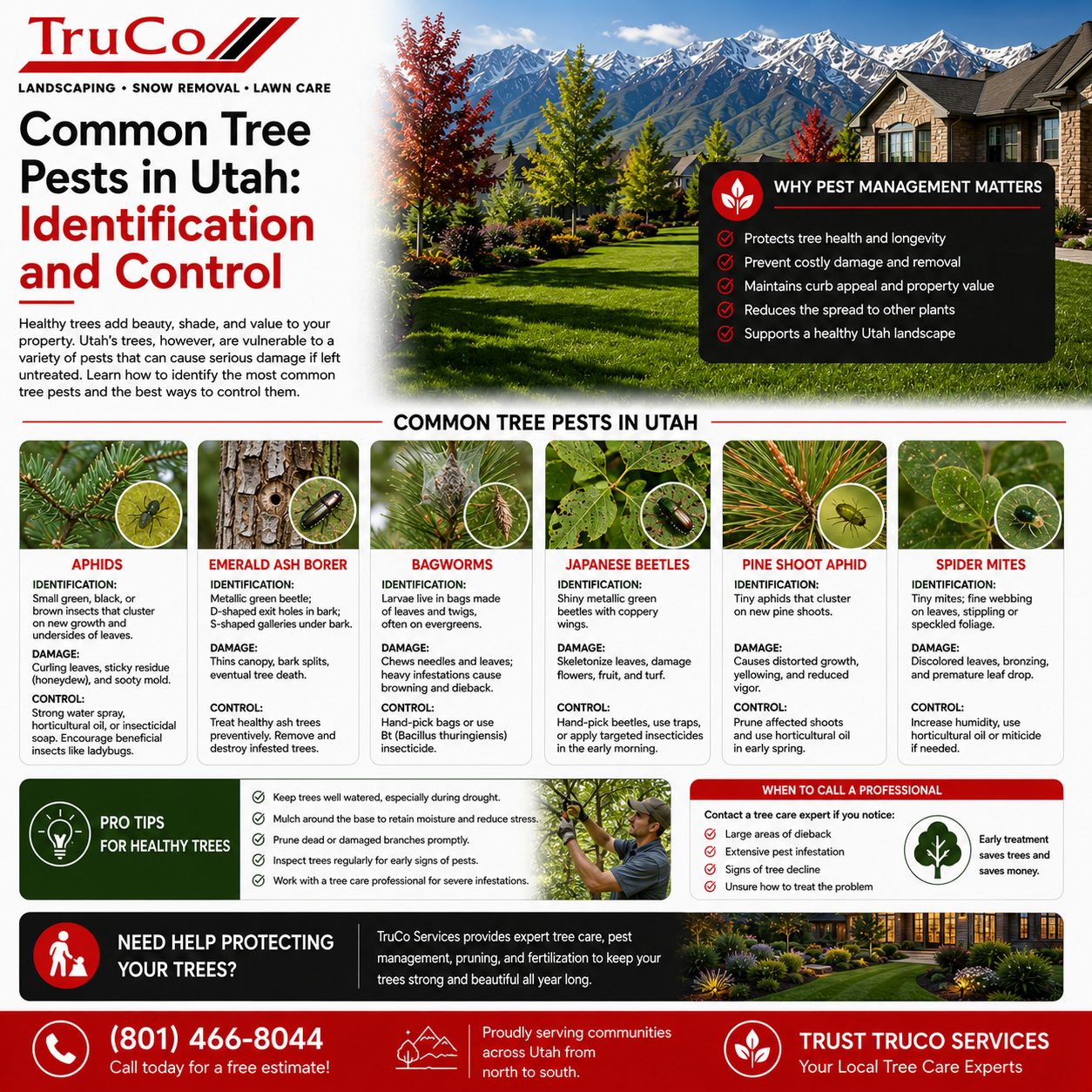
Common Tree Pests in Utah
Utah's trees face a variety of insect pests that can weaken, disfigure, or kill them. The state's dry climate, hot summers, and cold winters create unique pest pressures. Early identification is key — by the time most infestations are visible, significant damage has already occurred. This guide covers the most common tree pests along the Wasatch Front and how to manage them.
Bark Beetles
Bark beetles are the most destructive tree pests in Utah, responsible for widespread pine mortality. These small beetles bore through the bark and tunnel between bark and wood, disrupting water and nutrient transport. Signs include small pitch tubes on the trunk, reddish-brown sawdust in bark crevices, and needles turning from green to red. Stressed trees from drought or root damage are primary targets.
Aphids
Aphids are small, soft-bodied insects that feed on tree sap. They are common on aspen, cottonwood, maple, and fruit trees. Signs include curled leaves, sticky honeydew on surfaces below the tree, and black sooty mold. Strong water spray, insecticidal soap, and natural predators provide effective control.
Spider Mites
Spider mites thrive in Utah's hot, dry summers. They are nearly invisible but cause fine webbing on undersides of leaves, stippling on upper leaf surfaces, and bronzing of needles on evergreens. Colorado blue spruce is particularly susceptible. Regular overhead watering and horticultural oil provide control.
Scale Insects
Scale insects appear as small brown, white, or black bumps on bark, leaves, or twigs. They suck sap from trees, causing dieback and yellowing. Horticultural oil during the dormant season smothers overwintering scales. Systemic insecticides help with severe infestations.
Borers
Borers are larvae of beetles or moths that tunnel under bark. They attack ash, birch, poplar, and fruit trees. Signs include D-shaped exit holes, bark cracks with sawdust, and branch dieback from the top down. Healthy trees are less susceptible — proper watering and care are the best prevention.
Integrated Pest Management
The most effective approach combines monitoring, correct pest identification, cultural controls (proper watering and pruning), biological controls (beneficial insects), and selective chemical controls when needed. Healthy trees tolerate minor infestations without treatment.
When to Call a Professional
Call a certified arborist if you find bark beetle infestation on pines, borers on high-value trees, or infestation covering more than 30% of the tree. Arborists have access to professional-grade treatments not available to homeowners.