
Can You Legally Cut Down a Tree in Your Backyard in Utah

City Permit Requirements
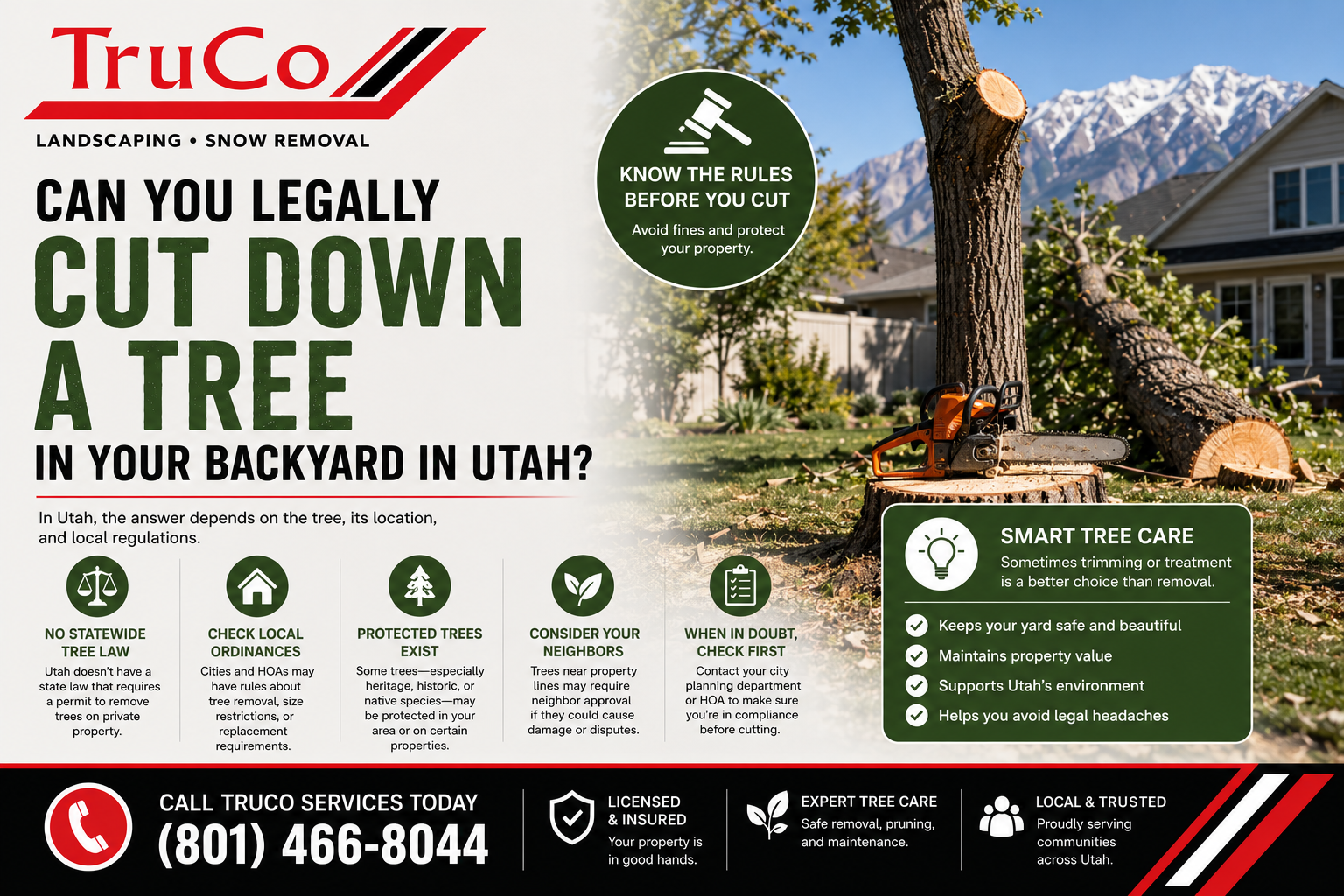
Many Utah cities require permits for tree removal, even on private property. Salt Lake City requires a permit for removing any tree over 6 inches in diameter at breast height. Provo requires permits for trees over 8 inches. Sandy requires permits for trees in public rights-of-way. Park City has strict tree protection ordinances. Always check with your city planning department before cutting.
Boundary and Neighbor Laws
If the trunk is entirely on your property, the tree is yours to manage. If the trunk straddles the property line, both neighbors share ownership — you need written permission to remove it. Branches overhanging from a neighbor's tree can be trimmed to the property line. In Utah, damaging or killing a neighbor's tree may make you liable for up to three times the tree's value.
Protected and Heritage Trees
Heritage trees in Salt Lake City, Provo, and Park City cannot be removed without a public hearing. Trees in historic districts are often protected. Native oak brush communities may be protected by county ordinances. Check with your city planning department for specific protections.
HOA Restrictions
Many HOAs require approval for removing any tree over a certain size. Review your CC&Rs before cutting. Violating HOA tree rules can result in fines or liens.
Safe Tree Removal
Call 811 before any digging to mark underground utilities. Hire a licensed, insured arborist for trees over 15 feet tall or near structures. Professional removal costs $300-1,500 but includes liability insurance.
Frequently Asked Questions
Do I need a permit to remove a dead tree? Most cities still require a permit, though the process may be expedited.
What happens if I cut without a permit? Fines range from $500-5,000 depending on the city and tree value.
Can my neighbor force me to remove a tree? Only if the tree is dead, diseased, or poses a clear safety hazard.