
Best Trees for Utah's Pollinators and Beneficial Insects

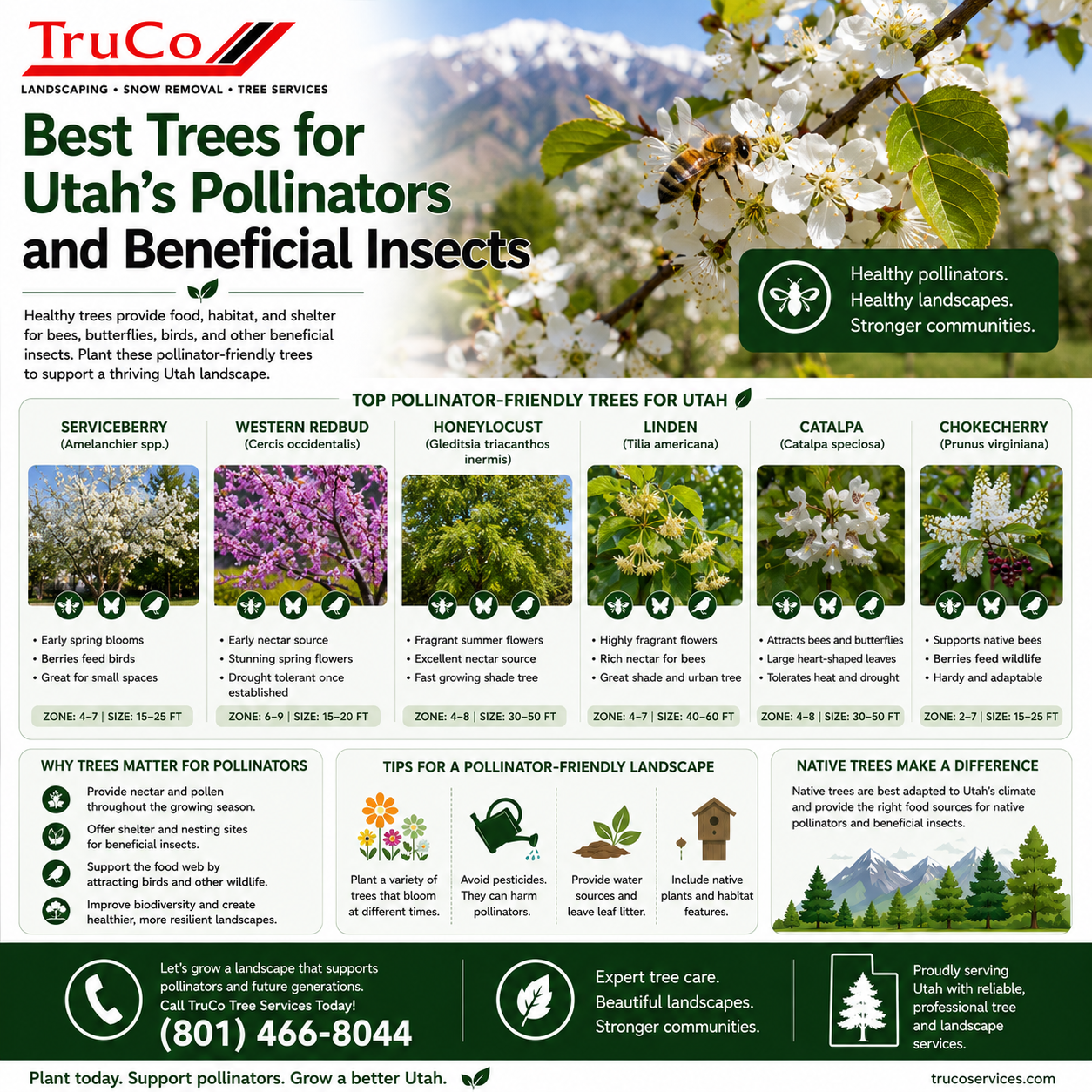
Why Pollinator Trees Matter in Utah
Utah's pollinators — including native bees, honeybees, butterflies, moths, and beneficial insects — face significant challenges. Habitat loss, pesticide use, climate change, and the decline of native flowering plants have reduced pollinator populations across the state. Trees play a crucial role in supporting pollinators because they produce massive amounts of flowers compared to smaller plants. A single mature tree can produce millions of blossoms in a season, providing an essential food source for bees and other pollinators. In Utah, where the growing season is relatively short (April-October in most valleys), early-blooming trees are especially important for pollinators emerging from winter dormancy. Flowering trees provide both nectar (for energy) and pollen (for protein and nutrients) that pollinators need to survive and reproduce. Trees also provide nesting sites, shelter from weather, and overwintering habitat for beneficial insects. By planting pollinator-friendly trees, Utah homeowners can create vital habitat that supports local ecosystems while enjoying beautiful flowers, shade, and increased property value. This guide covers the best tree species for supporting pollinators and beneficial insects in Utah landscapes.
How Trees Support Pollinators and Beneficial Insects
Trees support pollinators in several essential ways. Nectar — the sugar-rich liquid produced by flowers provides energy for bees, butterflies, moths, and other pollinators. Trees with high nectar production are especially valuable. In Utah, trees that bloom in early spring (March-April) provide critical food when few other flowers are available. Pollen — protein-rich pollen is essential for bee larvae and is collected by adult bees to feed their young. Different tree species provide pollen of varying quality. In Utah, willows and maples are excellent early-season pollen sources. Larval host plants — many butterflies and moths require specific tree species as host plants for their caterpillars. For example, monarch caterpillars need milkweed (not a tree, but an essential host). In Utah, willow trees host numerous butterfly and moth species. Butterflies and moths — trees provide perching, basking, and roosting sites for adult butterflies and moths. They also provide shelter from wind and predators. In Utah, trees near butterfly-friendly gardens enhance their value. Nesting sites — many native bees nest in dead wood, hollow stems, or cavities in trees. Trees with peeling bark provide crevices for nesting. In Utah, leaving some dead wood on trees (where safe) supports native bee populations. Overwintering habitat — many beneficial insects overwinter in leaf litter, under bark, or in protected crevices on trees. In Utah, leaving fallen leaves under trees until spring supports overwintering insects. Wind protection — trees serve as windbreaks that protect pollinator habitat and make it easier for bees and butterflies to forage. In Utah, this is especially valuable in exposed areas.
Best Early-Blooming Trees for Utah Pollinators
Early-blooming trees are critical for pollinators emerging from winter. In Utah, flowers that bloom before May are especially valuable. Willows (Salix species) — among the earliest blooming trees in Utah. Pussy willow and other native willows produce catkins packed with pollen and nectar in March-April. Critical food source for bees emerging from winter. Grow 15-40 feet depending on species. Tolerate wet soil and various conditions. Plant both male and female trees for maximum pollinator benefit. Red maple (Acer rubrum) — early red flowers in March-April before leaves emerge. Excellent early nectar and pollen source. Grows 40-60 feet tall. In Utah, choose cultivars adapted to alkaline soil conditions. Male trees produce more pollen. Flowering plum and cherry (Prunus species) — profuse pink or white spring flowers that attract bees and early butterflies. Grows 15-30 feet tall. Many ornamental varieties available for Utah landscapes. Excellent early-season bloomers. Some varieties produce fruit for birds. Serviceberry (Amelanchier species) — white spring flowers in April provide nectar for bees emerging from winter. Utah native species available. Grows 15-25 feet tall. Blue berries in summer feed birds and wildlife. Excellent fall color adds year-round interest. Redbud (Cercis canadensis) — pink-purple flowers in April before leaves emerge. Attracts native bees and early butterflies. Grows 20-30 feet tall. In Utah, choose a cold-hardy variety and plant in a protected location. A spectacular early bloomer. Flowering crabapple (Malus species) — profuse spring flowers in white, pink, or red. Excellent nectar and pollen source for bees. Grows 15-25 feet tall. In Utah, choose disease-resistant varieties like 'Prairiefire,' 'Spring Snow,' or 'Sugar Tyme.' Provides persistent fruit for birds in winter. Hawthorn (Crataegus species) — white, pink, or red spring flowers with a strong scent that attracts bees. Grows 15-30 feet tall. In Utah, native species like Douglas hawthorn (Crataegus douglasii) are excellent choices. Provides fruit for birds and wildlife. Thorny branches create excellent bird nesting habitat.
Summer-Blooming and Pollinator-Friendly Trees
Summer-blooming trees extend the pollinator season. Linden or basswood (Tilia species) — fragrant yellow flowers in June-July are highly attractive to bees. Lindens produce abundant, high-quality nectar for honey production. Grows 50-80 feet tall. Littleleaf linden (Tilia cordata) is an excellent choice for Utah. Tolerates alkaline soil. Note: linden flowers can be messy under the tree. Catalpa (Catalpa speciosa) — large, showy white flowers in June attract bees and butterflies. Grows 40-60 feet tall. Very adaptable to Utah conditions including alkaline soil and drought. Unique tropical appearance. Large heart-shaped leaves provide dense shade. Japanese tree lilac (Syringa reticulata) — creamy white flower clusters in June-July after most trees have finished blooming. Highly attractive to bees and butterflies. Grows 20-30 feet tall. Excellent street tree for Utah. Very adaptable to urban conditions and alkaline soil. Goldenrain tree (Koelreuteria paniculata) — yellow summer flowers in July-August attract pollinators. Grows 30-40 feet tall. Tolerates Utah's heat, drought, and alkaline soil. Interesting papery seed pods extend seasonal interest. Good for late-summer pollinator support. Honey locust (Gleditsia triacanthos) — greenish-yellow flowers in May-June provide pollen for bees. Grows 40-60 feet tall. Fine-textured foliage allows grass to grow beneath. Thornless and seedless varieties are available for Utah landscapes. Very adaptable and drought-tolerant. Kentucky coffeetree (Gymnocladus dioicus) — greenish-white flowers in May-June attract bees. Grows 50-70 feet tall. Extremely adaptable to Utah's alkaline soil and urban conditions. Late-emerging leaves in spring avoid frost damage. Unique, bold texture.
Creating a Pollinator-Friendly Tree Garden in Utah
Design your landscape to provide continuous pollinator support throughout the growing season. Plant a succession of bloomers — choose trees that bloom at different times. Early spring: willows, redbud, serviceberry, crabapple. Mid-spring: flowering plum, hawthorn, honey locust. Late spring-early summer: catalpa, linden, Japanese tree lilac. Summer: goldenrain tree, butterfly bush (shrub), summer-blooming perennials. This provides food for pollinators from March through September in Utah. Include host plants for butterflies — plant trees that serve as larval host plants for Utah butterflies. Willows host viceroy, mourning cloak, and several other butterfly caterpillars. Cottonwoods and aspens host various butterflies and moths. Oaks support more caterpillar species than any other tree genus — a single oak can host over 500 species of butterflies and moths. Avoid pesticide use — pesticides, especially insecticides, can kill pollinators. If pest control is necessary, use targeted treatments applied in the evening when pollinators are less active, avoid spraying flowers, and use the least toxic products available. In Utah, neonicotinoid insecticides are particularly harmful to bees and should be avoided. Choose native species — native Utah trees support more native pollinators than non-native trees. Native species have co-evolved with local pollinators and provide the most appropriate food and habitat. Excellent native choices include willows, serviceberry, Gambel oak, bigtooth maple, and Rocky Mountain juniper. Provide water — a shallow water source (bird bath, shallow dish with rocks) near flowering trees helps pollinators stay hydrated. In Utah's dry climate, water is a valuable addition to any pollinator garden. Change water regularly to prevent mosquitoes. Include nesting habitat — leave some dead wood on trees (where safe), provide bee nesting blocks, and leave some bare soil for ground-nesting bees. In Utah, many native bees are ground-nesters and need bare, well-drained soil patches.
Benefits Beyond Pollinators
Pollinator-friendly trees provide multiple benefits beyond supporting beneficial insects. Bird habitat — trees that attract insects also attract insect-eating birds. Many of the same trees that support pollinators also produce berries and fruit for birds. In Utah, serviceberry, crabapple, and hawthorn provide fruit for birds throughout winter. Shade and energy savings — the same trees that support pollinators also shade your home. In Utah, a well-placed shade tree can reduce cooling costs by 15-35%. Property value increase — mature, flowering trees increase property values. In Utah, homes with well-landscaped yards sell for 5-15% more than comparable properties without trees. Beauty and enjoyment — pollinator trees provide beautiful flowers, fall color, and the enjoyment of watching bees, butterflies, and birds visit your garden. In Utah, the spring blooming season is eagerly anticipated, and pollinator-friendly trees are the stars of the show. Environmental benefits — trees improve air quality, reduce stormwater runoff, sequester carbon, and cool the urban heat island effect. Pollinator-friendly trees provide all these benefits while also supporting local ecosystems.
Frequently Asked Questions
What is the best tree for bees in Utah? Linden (basswood) produces abundant nectar that makes excellent honey. Willows are the most important early-season food source. Crabapple and serviceberry provide both pollen and nectar in spring. For a single tree that supports bees throughout the season, plant a linden.
Do I need male and female trees for pollinators? Some trees are dioecious (have separate male and female trees). For willows and cottonwoods, male trees produce pollen (protein for bees) while female trees don't. Plant mostly male trees for pollinator benefit, but include some females if you want seeds or fruit for birds.
Will pollinator trees attract bees to my yard in Utah? Yes, flowering trees will attract bees, but bees are generally not aggressive and will not bother people if left alone. Honeybees and native bees are focused on collecting pollen and nectar and will ignore people. Avoid planting directly over seating areas if bee activity is a concern.
What trees support monarch butterflies in Utah? Monarch caterpillars only eat milkweed (not a tree). However, adult monarchs need nectar from flowering plants. Trees that provide fall-blooming flowers (goldenrain tree) or late-summer bloom (Japanese tree lilac) help fuel migrating monarchs. Willows also serve as host plants for many other butterfly species.
Can I have a pollinator-friendly yard without pesticides in Utah? Yes, and it's recommended. Use integrated pest management (IPM) techniques that minimize pesticide use. Accept some cosmetic damage from insects. Use physical controls (hand-picking, water spray) before chemical controls. If you must use pesticides, choose targeted, low-toxicity products and apply in the evening.